
Actuators By Motor Type(linear actuator motor)
Servo Motor Linear Actuators: Features and Applications
In modern automation, precision and repeatability are non-negotiable. Servo Motor Linear Actuators have become the preferred solution for engineers who need accurate, programmable linear motion. By combining a servo motor with a mechanical drive element — typically a ball screw or belt — these actuators convert rotary motion into tightly controlled linear movement, outperforming conventional pneumatic and hydraulic cylinders in accuracy, efficiency, and flexibility.
Key Features of Servo Motor Linear Actuators
- High precision and repeatability. Thanks to closed-loop feedback from encoders, Servo Motor Linear Actuators can achieve positioning accuracy within microns. This makes them ideal for applications where even the smallest deviation matters.
- Programmable motion profiles. Unlike fixed-stroke cylinders, a servo-driven linear drive system allows users to program speed, acceleration, position, and force through software. One actuator can handle multiple tasks simply by changing parameters.
- Energy efficiency. A Servo Linear motor consumes power only when moving, eliminating the constant energy drain of compressed-air systems and reducing operating costs over the machine’s lifetime.
- Clean and low-maintenance operation. With no oil leaks or air lines, servo-based linear drive systems suit cleanroom, food, and medical environments while requiring far less maintenance than hydraulic alternatives.
- Dynamic performance. High acceleration, fast cycle times, and smooth motion control enable greater throughput without sacrificing accuracy.
Typical Applications
Servo Motor Linear Actuators are widely used across industries:
- Industrial automation: pick-and-place systems, packaging machines, and assembly lines benefit from programmable multi-position control.
- Robotics and CNC machinery: precise linear drive systems power tool positioning, gantry axes, and robotic end-effectors.
- Medical and laboratory equipment: imaging devices, sample handlers, and surgical robots rely on the smooth, quiet motion of a Servo Linear motor.
- Semiconductor and electronics manufacturing: micron-level accuracy supports wafer handling, dispensing, and inspection processes.
- Automotive and aerospace testing: servo actuators deliver controlled force and position for durability testing, pressing, and riveting.
Why Choose Servo Over Pneumatic or Hydraulic?
While pneumatic cylinders remain cheap for simple two-position tasks, they lack mid-stroke positioning and force control. Hydraulic systems deliver high force but bring maintenance burdens and contamination risks. Servo Motor Linear Actuators bridge the gap — offering the precision of a Servo Linear motor with the robustness needed for industrial duty, all within a compact, energy-efficient package.
결론
As factories move toward smarter, more flexible production, servo-driven linear drive systems are becoming the standard for precision linear motion. Whether the goal is higher throughput, tighter tolerances, or lower energy consumption, Servo Motor Linear Actuators deliver measurable advantages — making them a smart investment for any modern automation project.
Step Motor Linear Actuators: Features and Applications
When an application demands accurate positioning without the cost and complexity of a full servo system, Step Motor Linear Actuators offer an ideal balance. By pairing a stepper motor with a lead screw or ball screw, these actuators convert rotary steps into precise, repeatable linear motion — all without requiring feedback devices in most cases. This simplicity has made them a workhorse in automation, instrumentation, and light industrial equipment.
Key Features of Step Motor Linear Actuators
- Open-loop precision. A stepper motor moves in discrete steps, so position is inherently predictable. With proper sizing, Step Motor Linear Actuators achieve reliable positioning accuracy without encoders, reducing system cost and wiring complexity.
- Excellent low-speed torque and holding force. Stepper motors deliver high torque at low speeds and can hold a position when powered. This makes a Step Linear motor actuator well suited for vertical loads and clamping tasks where the load must stay fixed without drifting.
- Simple linear motor control. Driving a stepper-based actuator requires only pulse and direction signals. Basic controllers, PLCs, or microcontrollers can manage the motion profile, making integration fast and programming straightforward — a major advantage for OEMs and machine builders.
- Cost-effectiveness. Compared with servo-driven alternatives, stepper linear actuators offer a lower total cost while still providing repeatable, programmable motion. For many positioning tasks, the performance gap simply doesn’t justify a servo’s price premium.
- Compact and configurable. Available with integrated lead screws, various stroke lengths, and multiple screw pitches, these actuators adapt easily to space-constrained designs.
Typical Applications
- Laboratory and medical instruments: pipetting systems, analyzers, and dosing pumps rely on precise linear motor control at low cost.
- 3D printing and desktop CNC: Step Motor Linear Actuators drive axes where repeatable incremental motion matters more than extreme speed.
- Valves and fluid control: proportional positioning of valves, dampers, and metering devices benefits from the stepper’s inherent holding torque.
- Optics and inspection: camera focus, stage positioning, and scanning systems use Step Linear motor actuators for smooth, vibration-free movement.
- Vending, kiosks, and office automation: quiet, dependable linear motion at an economical price point.
Stepper vs. Servo: Making the Right Choice
Servo systems excel at high speeds, dynamic loads, and applications needing absolute feedback. But for moderate speeds, well-defined loads, and budget-conscious designs, Step Motor Linear Actuators deliver dependable performance with far simpler linear motor control.
결론
Step Motor Linear Actuators combine precision, simplicity, and affordability in one compact package. For engineers seeking accurate positioning without closed-loop complexity, a Step Linear motor solution remains one of the most practical choices in modern linear motion — proving that smart linear motor control doesn’t have to be complicated or expensive.
Brushless Linear Actuators: Features and Applications
As industries push for longer service life, higher speeds, and zero-maintenance operation, Brushless Linear Actuators have emerged as a leading choice for demanding linear motion tasks. By combining a brushless DC (BLDC) motor with a precision screw or direct-drive mechanism, these actuators deliver the durability and performance that brushed alternatives simply cannot match — making them ideal for continuous-duty and high-cycle applications.
Key Features of Brushless Motor Linear Actuators
- Exceptional service life. Without brushes to wear out, Brushless Motor Linear Actuators eliminate the most common failure point of traditional designs. Service life is limited mainly by bearings and the screw, enabling tens of thousands of operating hours with minimal maintenance.
- High speed and efficiency. A brushless linear motor design converts electrical power into motion with far less heat and friction. The result is faster travel speeds, higher duty cycles, and lower energy consumption — a clear advantage in any dc motor linear application where uptime matters.
- Precise closed-loop control. Brushless actuators are typically paired with encoders or Hall sensors, enabling accurate position, speed, and torque control. This makes them suitable for sophisticated motion profiles, synchronized multi-axis systems, and dynamic load conditions.
- Compact power density. BLDC technology packs more torque into a smaller frame, allowing engineers to design slimmer machines without sacrificing force output.
- Clean, quiet, and spark-free. With no brush arcing or carbon dust, brushless actuators operate quietly and safely in cleanrooms, medical settings, and environments sensitive to electromagnetic interference.
Typical Applications
- Industrial automation: high-cycle pick-and-place, sorting, and packaging lines benefit from the durability of Brushless Motor Linear Actuators running 24/7.
- Medical devices: hospital beds, infusion systems, and diagnostic equipment rely on quiet, reliable dc motor linear motion with precise feedback.
- Automotive: seat adjustment, throttle control, and automated testing rigs use brushless actuators for long life under frequent operation.
- Aerospace and defense: flight simulators, antenna positioning, and actuation systems demand the reliability and power density of a brushless linear motor.
- Renewable energy: solar tracking and ventilation systems use brushless actuators for maintenance-free outdoor operation over many years.
Brushless vs. Brushed: Why Upgrade?
Brushed DC actuators are inexpensive and simple, but brush wear limits their life and duty cycle. For applications with frequent starts, continuous running, or hard-to-access installations, Brushless Motor Linear Actuators quickly repay their higher initial cost through reduced downtime and replacement expenses.
결론
Combining long life, high efficiency, and precise control, Brushless Linear Actuators represent the premium tier of dc motor linear motion. Whether upgrading from brushed designs or specifying a new machine, a brushless linear motor solution delivers reliable performance where it counts — cycle after cycle, year after year.
DC Linear Actuators: Features and Applications
When it comes to simple, reliable, and affordable linear motion, DC Linear Actuator Motorsremain the most widely used solution across industries. Powered directly by a low-voltage DC source, these actuators combine a brushed DC motor, gearbox, and lead screw into one compact unit — delivering push-pull movement for everything from furniture to farm machinery.
Key Features of DC Linear Actuator Motors
- Simple operation. DC Motor Linear Actuators run directly from a battery or power supply — just reverse the polarity to change direction. No complex drives or programming are required, making them the easiest linear motion technology to install and use.
- Flexible voltage options. Available in standard voltages, a 12v DC linear motor actuator suits automotive, marine, and RV applications where battery power is the norm, while a 24v dc motor linear actuator delivers higher force and speed for industrial and medical equipment. This flexibility lets engineers match the actuator to the available power system.
- Compact all-in-one design. Motor, gearbox, screw, and limit switches are integrated into a single sealed housing. A DC Linear motor actuator arrives ready to mount, with clevis ends or brackets for quick installation.
- Strong force in a small package. Despite their size, DC Motor Linear Actuators commonly deliver dynamic forces from a few hundred to several thousand newtons, with self-locking screw designs that hold position even when power is removed.
- Weather resistance. Many models carry IP65 or IP66 ratings, protecting against dust and water for dependable outdoor and mobile use.
Typical Applications
- Automotive and marine: 12v DC linear motor actuators power tonneau covers, hatches, throttles, seat adjustments, and engine compartments.
- Furniture and ergonomics: height-adjustable desks, recliners, and TV lifts use quiet 24v dc motor linear actuators for smooth comfort control.
- Medical and care equipment: hospital beds, patient lifts, and wheelchairs depend on safe, low-voltage actuation.
- Agriculture and construction: hood lifting, chute control, and implement adjustment on tractors and harvesters rely on rugged, weather-sealed actuators.
- Home automation and solar: window openers, hidden doors, and solar panel positioning are classic DC Linear motor applications.
Choosing Between 12V and 24V
The choice is straightforward: a 12v DC linear actuator motor integrates directly with vehicle and battery systems, while 24V models run cooler, draw less current, and support heavier loads — the preferred option for stationary industrial and medical machinery.
결론
DC Motor Linear Actuators offer an unbeatable combination of simplicity, affordability, and versatility. Whether the job calls for a compact 12v DC linear motor in a vehicle or a powerful 24v dc motor linear actuator on the factory floor, this proven technology delivers dependable motion with minimal engineering effort.
기능별 액추에이터
Coaxial Linear Actuators: Features and Applications
In machine design, space is often the scarcest resource. Coaxial Linear Actuators Motor solve this problem with an elegant layout: the motor, gearbox, and screw are aligned along a single axis, producing thrust in a straight line from a slim, inline package. This coaxial configuration has made them the go-to linear motion actuator for applications where width and height are limited but performance cannot be compromised.
Key Features of Coaxial Linear Actuators
- Slim inline profile. Because the linear actuator motor sits directly behind the drive screw rather than offset to the side, Coaxial Linear Actuators fit into narrow channels, columns, and housings where parallel-motor designs simply won’t go. This makes them ideal for lifting columns, medical devices, and furniture.
- Direct, efficient force transmission. With motor and screw on the same axis, torque passes through fewer gears and no right-angle drives. The result is higher mechanical efficiency, less backlash, and smoother, quieter operation than offset configurations.
- Balanced load handling. The inline geometry directs thrust straight through the actuator body, minimizing side loading and bending moments. Bearings and seals wear more evenly, extending service life and improving reliability under repeated cycles.
- Clean aesthetics and easy integration. A coaxial linear motion actuator presents a uniform, tube-like form factor that is easy to conceal inside equipment and simple to mount with standard clevis or trunnion brackets. Multiple units can be synchronized for lifting platforms and adjustable workstations.
- Versatile motor options. The coaxial layout accommodates brushed DC, brushless DC, and stepper motors, allowing designers to match the linear actuator motor to the required speed, duty cycle, and control precision.
Typical Applications
- Ergonomic furniture: lifting columns for height-adjustable desks and workstations are the classic home of Coaxial Linear Actuators, where slim legs hide the entire drive system.
- Medical equipment: examination tables, treatment chairs, and patient hoists use inline actuators for quiet, hygienic, space-saving adjustment.
- Industrial automation: compact pressing, positioning, and ejection stations benefit from a linear motion actuator that mounts inside tight machine frames.
- Marine and vehicle systems: hatches, ladders, and console lifts where installation depth is limited.
- Solar and ventilation: panel tracking and louver control in narrow structural profiles.
Coaxial vs. Parallel-Motor Designs
Parallel (gear-offset) actuators are shorter end-to-end but wider, and their right-angle drives cost efficiency and add noise. Where the installation envelope favors length over width — and where smooth, efficient thrust matters — Coaxial Linear Actuators are usually the better linear actuator motor solution.
결론
Coaxial Linear Actuators Motor combine space efficiency, mechanical simplicity, and smooth performance in one streamlined linear motion actuator. For designers fighting for every millimeter of installation space without giving up force or reliability, the coaxial configuration remains a smart, proven choice.

Reciprocating Cycle Actuators: Features and Applications
Many industrial processes don’t need a single push or pull — they need motion that repeats, thousands or millions of times. Reciprocating Cycle Actuators are purpose-built for exactly this: continuous, automatic back-and-forth linear movement at a set stroke and frequency. As a specialized class of electric linear actuator motor, they replace manually reversed cylinders and improvised linkage systems with a compact, self-contained reciprocating solution.
Key Features of Reciprocating Cycle Actuators
- Automatic continuous cycling. Unlike a standard linear actuator motor that moves on command, a reciprocating actuator reverses direction automatically at each end of its stroke. Once switched on, it cycles indefinitely without external control signals — no PLC programming or solenoid valve timing required.
- Adjustable stroke and frequency. Most Reciprocating Cycle Actuators allow users to tune stroke length and cycles per minute, so one unit can serve different products, test profiles, or process requirements with a simple mechanical or electronic adjustment.
- Mechanically efficient design. Using a crank, Scotch yoke, or reversing screw mechanism driven by an electric linear actuator motor package, these units convert rotary input into true sinusoidal or linear reciprocation with high efficiency and low wear.
- Built for endurance. Bearings, guides, and drive components are sized for millions of cycles. Sealed housings and lifetime lubrication keep maintenance near zero, even in dusty or humid environments.
- Compact and self-contained. Motor, gearbox, and reciprocating mechanism integrate into a single housing that mounts directly where the motion is needed — no external cams, counters, or reversing circuits.
Typical Applications
- Fatigue and durability testing: Reciprocating Cycle Actuators drive test rigs for switches, springs, hinges, fabrics, and consumer products, simulating years of use in days.
- Spraying and coating: reciprocating spray guns and coating heads sweep evenly across parts for uniform coverage in painting and powder-coating lines.
- Screening and agitation: laboratory shakers, sieves, and mixing platforms rely on consistent reciprocation for repeatable results.
- Pumping and dosing: diaphragm and piston dosing systems use this linear motor actuator style for metered, pulsation-controlled flow.
- Textile and packaging machinery: thread guides, cutters, and folding mechanisms benefit from high-frequency, precisely timed strokes.
Reciprocating Actuators vs. Reversed Cylinders
Reversing a pneumatic cylinder or standard actuator with external controls works, but adds valves, sensors, timing logic, and wear points. Dedicated Reciprocating Cycle Actuators do the same job with fewer components, better repeatability, and far lower long-term cost.
결론
For any process that lives on repetition, Reciprocating Cycle Actuators offer the simplest path to reliable, continuous linear motion. Combining the convenience of an electric motor linear actuator with the endurance of a purpose-built cycling mechanism, this linear motor actuator category keeps testing lines, coating systems, and process machinery moving — cycle after cycle after cycle.


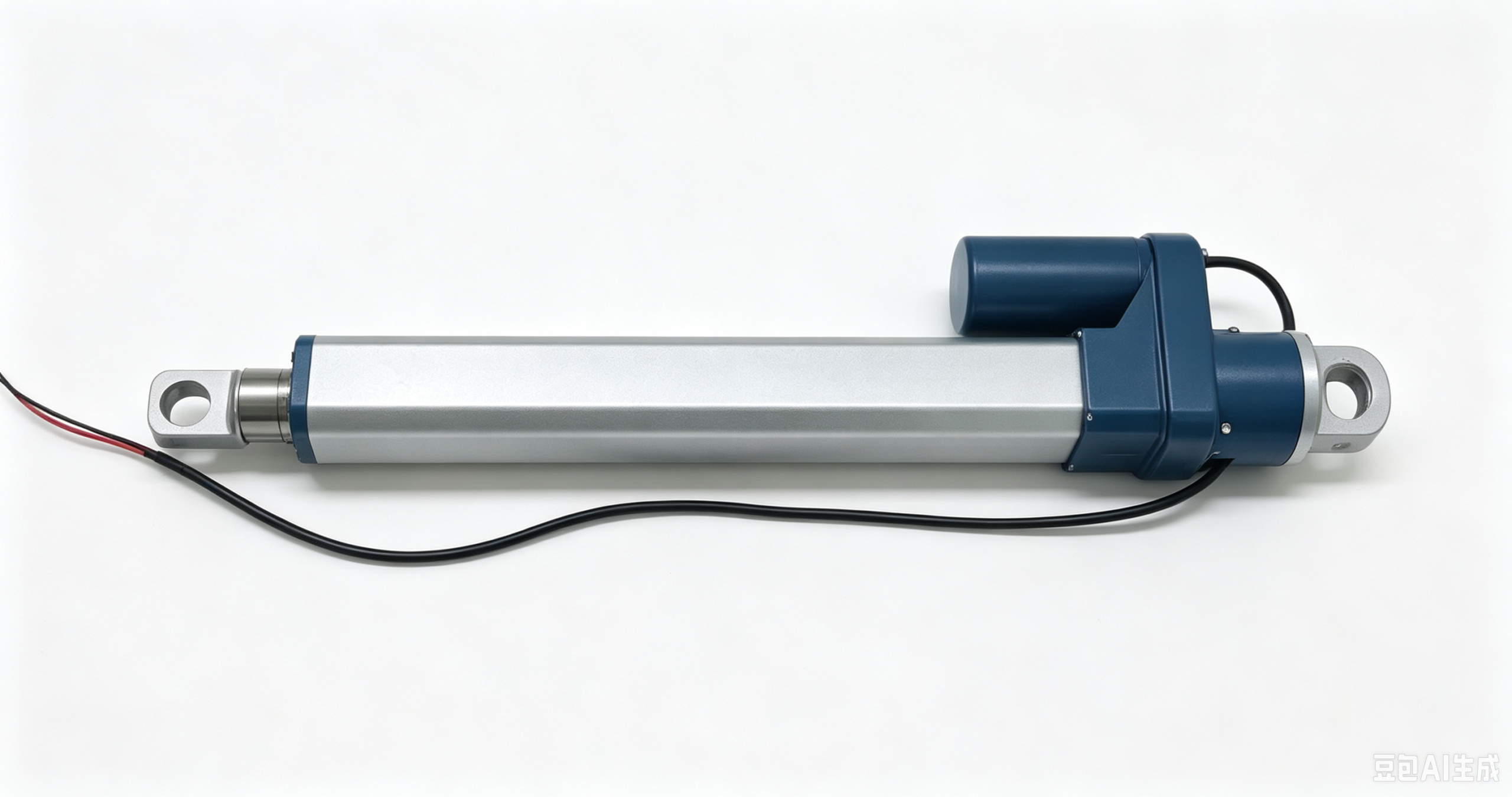
Linear Actuators with Position Feedback: Features and Applications
Knowing an actuator can move is one thing — knowing exactly where it is at any moment is another. Linear Actuators with Position Feedback solve this by integrating sensors that report real-time rod position to the control system. This capability transforms basic linear electric actuators into intelligent motion devices capable of precise positioning, synchronization, and diagnostics.
Key Features of Linear Actuator Motor with Position Feedback
- Real-time position sensing. Built-in feedback devices — typically potentiometers, Hall effect sensors, or optical encoders — continuously report the actuator’s position. Potentiometer-based units provide an analog voltage proportional to stroke; Hall effect and encoder versions output digital pulses for higher resolution and noise immunity.
- Accurate mid-stroke positioning. With feedback, linear actuator controls can stop the rod at any point along its travel, not just at the end limits. This enables multi-position adjustment, proportional control, and repeatable setpoints — essential for any positioning task beyond simple extend-and-retract.
- Multi-actuator synchronization. When two or more actuators lift a shared load — a desk, hatch, or platform — feedback allows the controller to compare positions and correct drift, keeping all units moving in perfect step and preventing binding or structural stress.
- Diagnostics and safety. Position data enables stall detection, overload monitoring, and soft start/stop routines. Modern linear actuator controls can flag faults before damage occurs, protecting both equipment and operators.
- Easy system integration. Standard analog or pulse outputs connect directly to PLCs, microcontrollers, and dedicated control boxes, making feedback-equipped linear electric actuators straightforward to incorporate into automated systems.
Typical Applications
- Ergonomic furniture: height-adjustable desks with memory presets rely on Linear Actuators with Position Feedback to return to saved heights and synchronize multiple lifting columns.
- Medical equipment: hospital beds, surgical tables, and patient lifts require verified, repeatable positioning for safety and comfort.
- Industrial automation: diverters, gates, and tooling that must stop at precise intermediate positions use feedback-equipped linear electric actuators instead of servo systems at lower cost.
- Solar and ventilation: tracking systems and louver controls use position data to angle panels and dampers accurately against changing conditions.
- Automotive and marine: hatches, ramps, and throttles benefit from proportional control and end-position verification.
Feedback vs. Non-Feedback Actuators
Standard actuators suit simple two-position tasks. But whenever an application demands intermediate stops, synchronized lifting, or position confirmation, Linear Actuators with Position Feedback eliminate guesswork — at a modest price premium that pays for itself in functionality and reliability.
결론
Linear Actuators with Position Feedback bring intelligence to linear motion. Paired with modern linear actuator controls, these versatile linear electric actuators deliver precise positioning, safe synchronization, and actionable diagnostics — making them the smart choice for any application where knowing the position matters as much as reaching it.
Linear Actuator Kits with Remote Control: Features and Applications
For many buyers, the hardest part of adding linear motion isn’t choosing an actuator — it’s wiring the power supply, switches, and controls to make it work. Kits with Remote Control eliminate that barrier by packaging everything in one box: the actuator, controller, power supply or wiring harness, and a wireless remote. The result is a true plug-and-play electric linear actuator motor solution that runs within minutes of unboxing.
Key Features of Linear Actuator Kits with Remote Control
- Complete, matched components. Every element in the kit — actuator, control box, remote handset, and cables — is pre-matched for voltage, current, and connector compatibility. There’s no risk of pairing the wrong power supply with the wrong motor, which is the most common cause of actuator failure in DIY and OEM installations.
- Wireless convenience. RF remotes typically work at ranges of 15–50 meters and don’t require line of sight, unlike infrared. Users can extend or retract the actuator from across a room, a vehicle cab, or a factory floor. Many kits also support wall switches or wired handsets as backups.
- Simple linear actuator controls. The included controller handles polarity reversal and current limiting automatically. Advanced kits add features like soft start/stop, adjustable travel limits, memory positions, and synchronization of two or more actuators from a single remote.
- Fast installation. With pre-wired connectors and mounting brackets included, a kit turns an electric motor linear actuator into a working system with basic tools — no electrical engineering degree required.
- Scalable configurations. Kits are available with single actuators or multi-channel linear actuator controls driving two to four synchronized units for shared loads.
Typical Applications
- Home automation: hidden TV lifts, pop-up cabinets, motorized projector screens, and adjustable beds are classic uses for Kits with Remote Control.
- Furniture and ergonomics: sit-stand desks and reclining furniture use synchronized multi-actuator kits with memory presets.
- Vehicles and marine: tonneau covers, boat hatches, RV slide-outs, and cargo lifts operated from the driver’s seat.
- Agriculture and workshops: remote-controlled chute gates, feeders, and ventilation panels.
- Exhibitions and stage design: moving displays, rotating platforms, and reveal mechanisms triggered from backstage.
Kits vs. Individual Components
Buying components separately can save money for experienced integrators, but Kits with Remote Control save time, guarantee compatibility, and simplify after-sales support — one supplier, one warranty, one manual.
결론
Linear Actuator Kits with Remote Control take the complexity out of motion projects. By bundling a quality electric linear actuator motor with matched linear actuator controls and a wireless remote, these kits let anyone — from DIY enthusiasts to equipment manufacturers — add reliable remote-controlled movement in a single afternoon.