
Einleitung
Der weltweite Umstieg auf erneuerbare Energien hat die Nachfrage nach Sonnennachführsysteme in allen Größenordnungen – von riesigen Großanlagen bis hin zu kompakten, tragbaren Lösungen. Während groß angelegte Sonnennachführung Während Solar-Arrays die Schlagzeilen beherrschen, zieht ein rasant wachsendes Segment die Aufmerksamkeit von Outdoor-Fans, Remote-Arbeitern und Notfallvorbereitungsgemeinschaften auf sich: tragbare Solar-Nachführsysteme. Diese leichten, mobilen Einheiten vereinen die Vorteile der Energiegewinnung durch automatisierte Sonnennachführung mit der Flexibilität, überall eingesetzt zu werden. Dieser Artikel befasst sich mit den vielfältigen Anwendungsszenarien, der aktuellen Marktdynamik und dem zukünftigen Wachstumspotenzial von tragbaren Solartracking-System Technologie.
Was ist ein tragbares Gerät? Solar-Nachführsystem?
Ein tragbares Solartracking-System ist eine kompakte, transportable Halterungslösung für Photovoltaikanlagen (PV), die mit leichten Motoren oder manuellen Verstellmechanismen ausgestattet ist, welche die Solarmodule den ganzen Tag über zur Sonne ausrichten. Im Gegensatz zu fest installierten Dach- oder Bodenanlagen sind tragbare Nachführsysteme auf Mobilität ausgelegt – zusammenklappbare Rahmen, faltbare Module und batteriegestützte Kraftwerke zeichnen diese Kategorie aus.
Diese Systeme haben in der Regel eine Leistung von 50 W bis 400 W und sind einachsig oder zweiachsig ausgelegt Sonnennachführung Mechanismen und lassen sich mit tragbaren Stromversorgungsstationen für die netzunabhängige Energiespeicherung kombinieren. Fortgeschrittene Modelle verfügen über GPS-basierte astronomische Algorithmen und Lichtsensoren, um den Neigungswinkel der Module automatisch und ohne Eingreifen des Benutzers zu optimieren.
Wichtige Anwendungsszenarien
1. Wohnmobile (RV) und „Van Life“
Die Bewegung rund um das Leben im Wohnmobil und im Van hat weltweit einen regelrechten Boom erlebt: Millionen von Reisenden streben nach Energieunabhängigkeit auf der Straße. Tragbar Sonnennachführsysteme Wenn sie auf Wohnmobildächern montiert oder als Bodenanlagen aufgestellt werden, liefern sie im Vergleich zu fest installierten Modulen 20–40% mehr Energie pro Tag. Reisende können in schattigen Bereichen parken und gleichzeitig die Nachführsysteme so ausrichten, dass sie direktem Sonnenlicht ausgesetzt sind, was die Flexibilität maximiert.
Flexible Solarmodule in Kombination mit leichten Nachführsystemen ermöglichen es Wohnmobilbesitzern, morgens und abends optimales Sonnenlicht zu nutzen – zu Zeiten, in denen fest installierte Module aufgrund des flachen Einfallswinkels an Effizienz einbüßen. Durch die Integration mit Lithium-Stromversorgungsanlagen können Haushaltsgeräte, Klimaanlagen und Zusatzbatterien von Elektrofahrzeugen kontinuierlich aufgeladen werden.
2. Anwendungen in der Schifffahrt und im Wassersport
Bootsfahrer und Segler stehen vor ganz besonderen Herausforderungen: begrenzter Platz an Deck, Schatten durch Masten und Takelage sowie die ständige Bewegung des Bootes. Tragbare Solartracking-System Lösungen, die speziell für den Einsatz auf See entwickelt wurden, nutzen korrosionsbeständige Materialien und flexible Befestigungssysteme, die sich an die Wellenbewegung anpassen. Diese Systeme versorgen Navigationselektronik, Kühlanlagen, Kommunikationsgeräte und Batteriebänke während langer Fahrten mit Strom.

Tragbare Solarmodule in Marinequalität verfügen in der Regel über ETFE-beschichtete, flexible Module, die für den Einsatz in Salzwasser ausgelegt sind und eine Leistung zwischen 100 W und 300 W erbringen. Die Möglichkeit, die Module aus dem Segelschatten heraus zu positionieren, stellt einen erheblichen Vorteil gegenüber fest installierten Anlagen dar.
3. Camping und Overlanding in der freien Natur
Camper in der Wildnis, Overlander und Rettungskräfte benötigen an Orten ohne Netzanschluss eine zuverlässige Stromversorgung. Tragbare Sonnennachführung Sets mit klappbaren Paneelen und auf Stativen montierten Nachführsystemen liefern eine dauerhafte Stromversorgung für GPS-Geräte, Satellitenkommunikationsgeräte, medizinische Geräte und Beleuchtungssysteme.
Moderne, für den Campingbereich konzipierte Tracker wiegen weniger als 15 kg und lassen sich in weniger als 5 Minuten aufbauen. Einige fortschrittliche Modelle verfügen über automatisierte Sonnennachführung mit Steuerung per Smartphone-App, sodass Nutzer die Energieerzeugung auch beim Wandern oder Angeln aus der Ferne überwachen können. Durch die Kombination aus hocheffizienten monokristallinen Zellen und Nachführmechanismen lässt sich 30–50% mehr Energie erzeugen als mit statischen Modulen gleicher Nennleistung.
4. Remote-Arbeit und digitales Nomadentum
Der Aufstieg der Telearbeit hat eine neue Bevölkerungsgruppe hervorgebracht: die “digitalen Nomaden”, die von Stränden, aus den Bergen und aus der Wüste aus arbeiten. Tragbar Sonnennachführsysteme Laptops, Starlink-Terminals, Kameras und mobile Büros in netzunabhängigen Umgebungen. Coworking-Spaces an abgelegenen Standorten bieten zunehmend gemeinsam genutzte Solar-Nachführanlagen als Zusatzleistung an.
5. Katastrophenvorsorge und Katastrophenhilfe
Bei Naturkatastrophen und Stromausfällen sind tragbare Solartracking-System Diese Geräte liefern die dringend benötigte Energie für Kommunikationsgeräte, medizinische Geräte und Wasseraufbereitungsanlagen. Dank ihrer schnellen Einsatzbereitschaft sind sie unverzichtbare Bestandteile von Notfallausrüstungen für humanitäre Organisationen und militärische Einsätze.
Marktanteile und Branchenlandschaft
Die weltweite Solartracking-System Der Markt verzeichnete ein explosives Wachstum, wobei die Gesamtliefermenge an Nachführsystemen allein im Jahr 2023 92 GW DC erreichte. Während Großanlagen den größten Anteil ausmachen, entwickelt sich das Segment der mobilen und dezentralen Anlagen zu einer wachstumsstarken Nische.
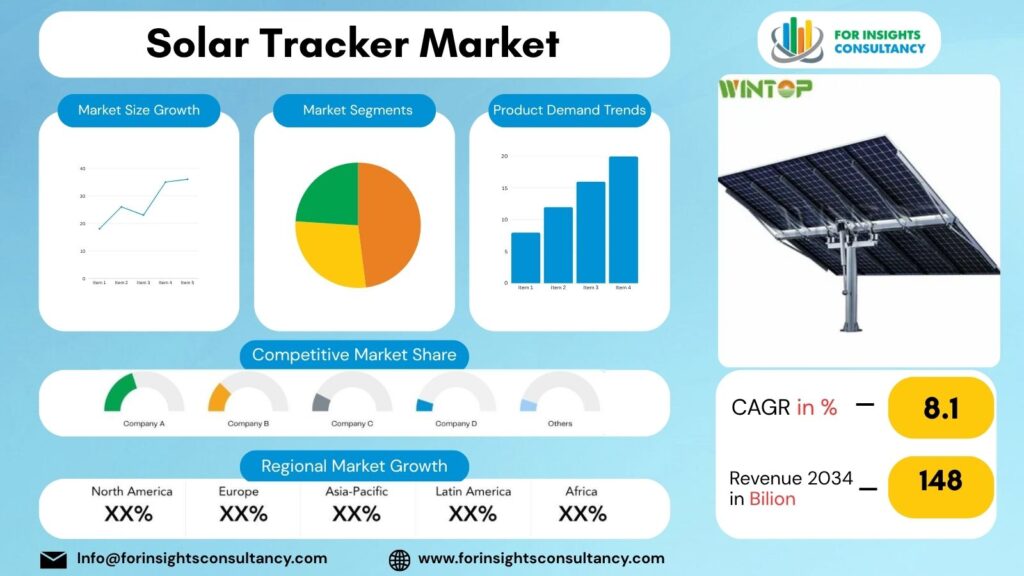
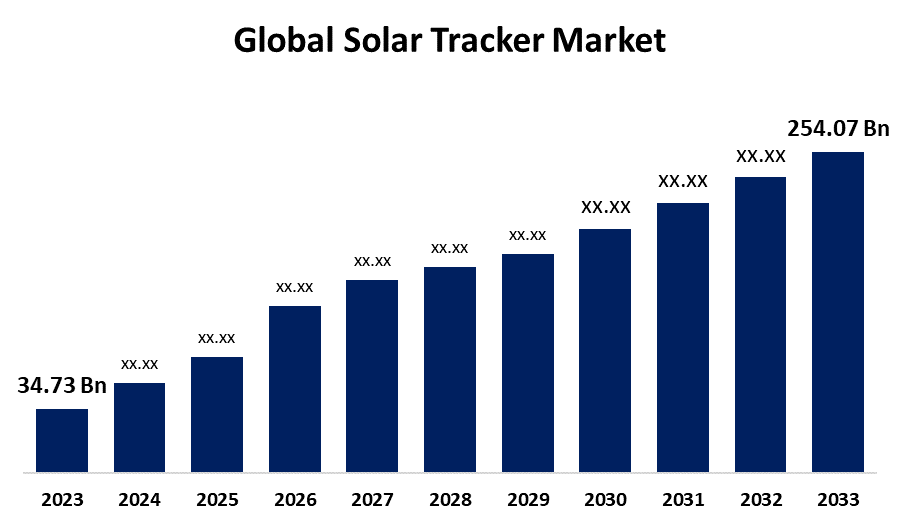
Branchenprognosen zufolge wird der Gesamtmarkt Markt für Solar-Nachführsysteme Es wird prognostiziert, dass der Markt von $34,73 Milliarden im Jahr 2023 auf über $254 Milliarden bis zum Jahr 2033 wachsen wird, was einer durchschnittlichen jährlichen Wachstumsrate (CAGR) von über 22% entspricht. Innerhalb dieses expandierenden Marktes erobern tragbare und mobile Ortungslösungen ein eigenständiges Segment, dessen Marktvolumen auf jährlich $2,5–3,5 Milliarden geschätzt wird und für das aufgrund von Trends in den Bereichen Freizeitaktivitäten im Freien und Notfallvorsorge ein zweistelliges Wachstum prognostiziert wird.
Regionale Verteilung
- Nordamerika: Dominiert den Markt für tragbare Nachführsysteme aufgrund der hohen Zahl an Wohnmobilbesitzern (über 11 Millionen Haushalte), einer ausgeprägten Campingkultur und des Bewusstseins für Katastrophenvorsorge. Auf die USA entfallen etwa 35% der weltweiten Nachfrage nach tragbaren Solar-Nachführsystemen.
- Europa: Starkes Wachstum in den „Van-Life“- und Segel-Communities, insbesondere in Deutschland, Frankreich und den nordischen Ländern. Die politische Förderung netzunabhängiger Lösungen mit erneuerbaren Energien beschleunigt deren Verbreitung.
- Asien-Pazifik: Ein aufstrebender Markt, dessen Wachstum sich vor allem auf Australien (Camping und Bergbau in abgelegenen Gebieten), Japan (Katastrophenschutz) und China (Produktionsstandort und boomende heimische Outdoor-Freizeitbranche) konzentriert.
- Naher Osten und Afrika: Nischenmarkt, aber wachsende Nachfrage nach tragbaren Lösungen für humanitäre und militärische Anwendungen.
Wettbewerbsumfeld
Das tragbare Sonnennachführung Der Markt zeichnet sich durch eine Mischung aus etablierten Solarunternehmen und spezialisierten Innovatoren aus:
- Hersteller von Solartechnik: Unternehmen wie Jackery, EcoFlow und Goal Zero dominieren den Markt für integrierte Stromversorgungsstationen und gehen zunehmend Partnerschaften mit Entwicklern von Nachführsystemen ein.
- Spezialisten für Ortungssysteme: Unternehmen wie Solar Pivot Power und verschiedene chinesische Hersteller (die OEM-Lösungen für Marken weltweit produzieren) konzentrieren sich auf leichte mechanische Nachführsysteme.
- Hersteller von flexiblen Platten: Hersteller von ETFE- und Dünnschichtmodulen liefern die leichten, langlebigen Komponenten, die für mobile Anwendungen unverzichtbar sind.
Technische Vorteile der tragbaren Sonnennachführung
Tragbar Sonnennachführsysteme messbare Leistungsvorteile bieten:
- Verbesserung des Energieertrags: Durch einachsige Nachführung lässt sich die tägliche Energieausbeute um 20–35% steigern; zweiachsige Systeme können gegenüber fest installierten Anlagen einen Zuwachs von 40–45% erzielen.
- Verlängerte Produktionszeiten: Die Nachführsysteme beginnen bereits früher am Morgen mit der Stromerzeugung und fahren bis später in den Abend hinein weiter, wodurch die Produktionskurve abgeflacht wird.
- Platzersparnis: Eine höhere Energiedichte pro Flächeneinheit bedeutet einen geringeren Platzbedarf bei gleicher Leistungsabgabe – ein entscheidender Faktor für mobile Anwendungen.
- Geringere Einfallswinkelverluste: Eine optimale Ausrichtung der Module minimiert Reflexionsverluste, was insbesondere in den Wintermonaten und in hohen Breitengraden von Bedeutung ist.
Herausforderungen und Zukunftsaussichten
Trotz vielversprechender Wachstumsaussichten ist der tragbare Solartracking-System Das Segment steht vor Herausforderungen:
- Kostenaufschlag: Nachführmechanismen verursachen im Vergleich zu fest installierten, tragbaren Modulen zusätzliche Systemkosten in Höhe von 15–30%.
- Gewicht und Haltbarkeit: Die Vereinbarkeit von leichtem Design und struktureller Festigkeit zur Gewährleistung der Wind- und Wetterbeständigkeit stellt nach wie vor eine technische Herausforderung dar.
- Stromverbrauch: Motorisierte Tracker verbrauchen einen Teil der erzeugten Energie, wobei moderne Konstruktionen diesen Verbrauch auf <3% der täglichen Produktion minimieren.
Zukünftige Innovationen werden diese Einschränkungen durch folgende Maßnahmen überwinden:
- KI-gestützte Optimierung: Algorithmen des maschinellen Lernens, die die Bewölkung vorhersagen und die Nachführstrategien anpassen, um bei wechselnder Sonneneinstrahlung den Energieertrag zu maximieren.
- Ultraleichte Werkstoffe: Durch den Einsatz von Kohlefaser und modernen Verbundwerkstoffen wird das Systemgewicht um 40–50% reduziert.
- Integrierter Speicher: Kraftwerke der nächsten Generation mit höherer Energiedichte und schnelleren Lademöglichkeiten.
- Modulare Erweiterung: Skalierbare Systeme, die es den Nutzern ermöglichen, mehrere Ortungsgeräte anzuschließen, um die Kapazität zu erhöhen.
Das tragbare Solartracking-System Dieser Markt steht für eine Verschmelzung von Technologien im Bereich der erneuerbaren Energien, Trends im Outdoor-Lifestyle und Anforderungen an die Energiesicherheit. Von den Dächern von Wohnmobilen bis hin zu Katastrophengebieten – diese mobilen Sonnennachführung Diese Lösungen ermöglichen einem breiteren Kreis den Zugang zu effizienter Solarenergie. Mit der zunehmenden Solartracking-System Da der Markt bis 2033 voraussichtlich $250 Milliarden überschreiten wird, dürften mobile Anwendungen einen immer bedeutenderen Anteil an diesem Wachstum für sich verbuchen.
Für Hersteller, Händler und Verbraucher ist die Botschaft klar: Die Zukunft der Solarenergie liegt nicht nur in riesigen Solarparken – sie liegt auch in intelligenten, mobilen Lösungen, die der Sonne folgen, wohin auch immer das Leben einen führt. Mit dem technologischen Fortschritt und sinkenden Kosten werden tragbare Sonnennachführung Diese Systeme werden weltweit zur Standardausrüstung für Outdoor-Begeisterte, Fachkräfte in abgelegenen Gebieten und Rettungskräfte werden.


Einen Kommentar hinterlassen