
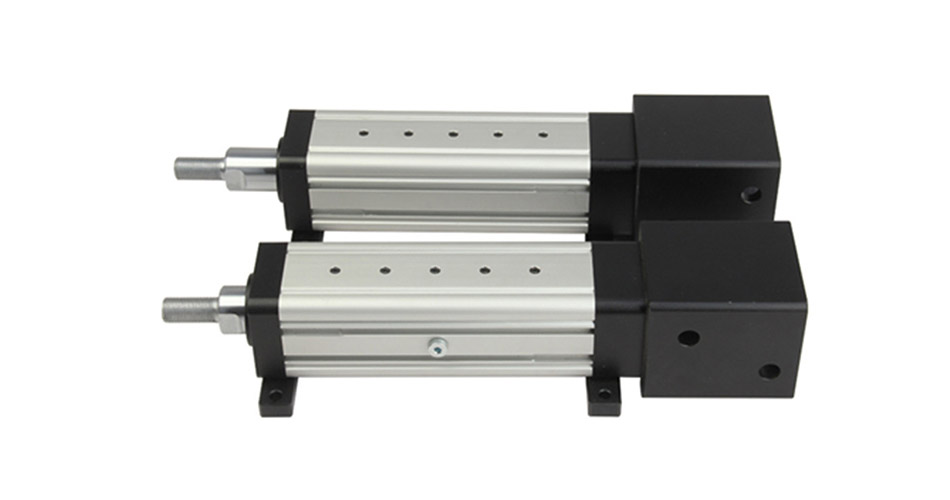
Replacing Hydraulic Cylinders with an 8-Ton Electric Actuator Cylinder in Tire Press Equipment
In the tire manufacturing industry, hydraulic cylinders have been the default power source for decades. They open and close molds, press green tires into shape, and apply the enormous forces required by curing and testing machines. Yet across modern tire plants, a quiet but accelerating transition is underway: engineers are replacing hydraulic cylinders with high-force electric actuator cylinders — and in many stations, a compact 8-ton (80 kN) elektrischer Hubzylinder with 80 mm/s speed and 300 mm stroke is proving to be the smarter choice.
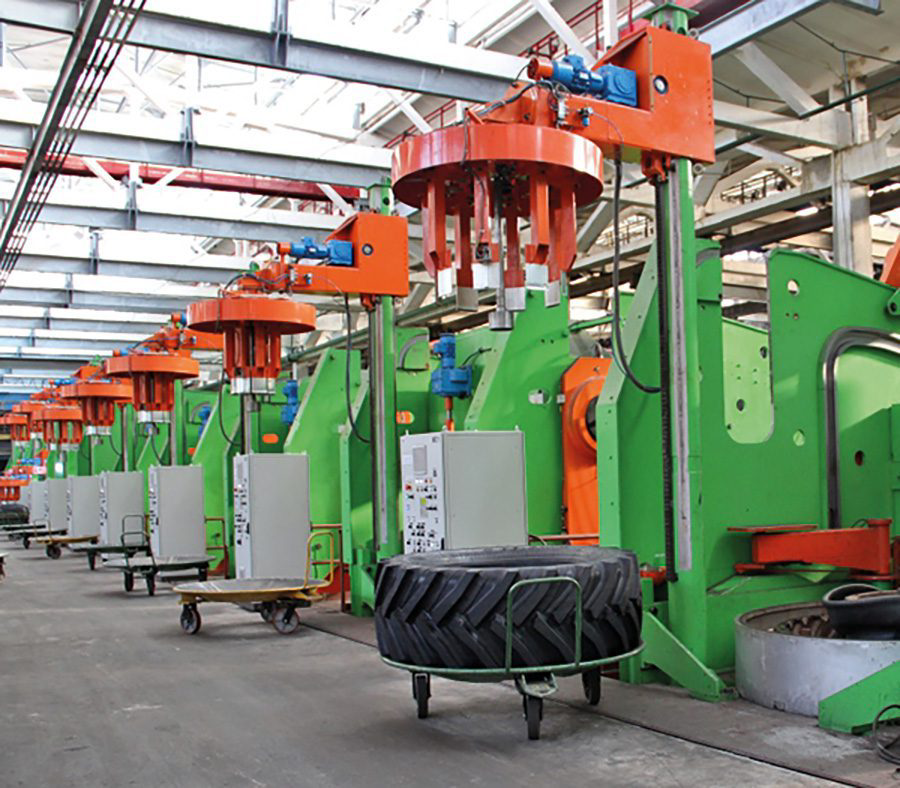
This article explains why one of our customers made exactly that switch on their tire pressing equipment, what the replacement involves, and why the “electric over hydraulic” trend is reshaping tire machinery worldwide.
The Application: Tire Pressing Equipment
Tire pressing and post-curing equipment demands a linear drive that can deliver high, stable force through a controlled stroke — typically to press, clamp, or shape the tire carcass. Traditionally, this job belongs to a hydraulic cylinder fed by a central power unit, with hoses, valves, and a reservoir.
The customer in this case study replaced their hydraulic cylinder with an elektrischer Antriebszylinder specified as follows:
- Rated force: 8 tons (≈ 80 kN), equal push and pull capacity
- Geschwindigkeit: 80 mm/s, fully adjustable
- Schlaganfall: 300 mm, with programmable end positions
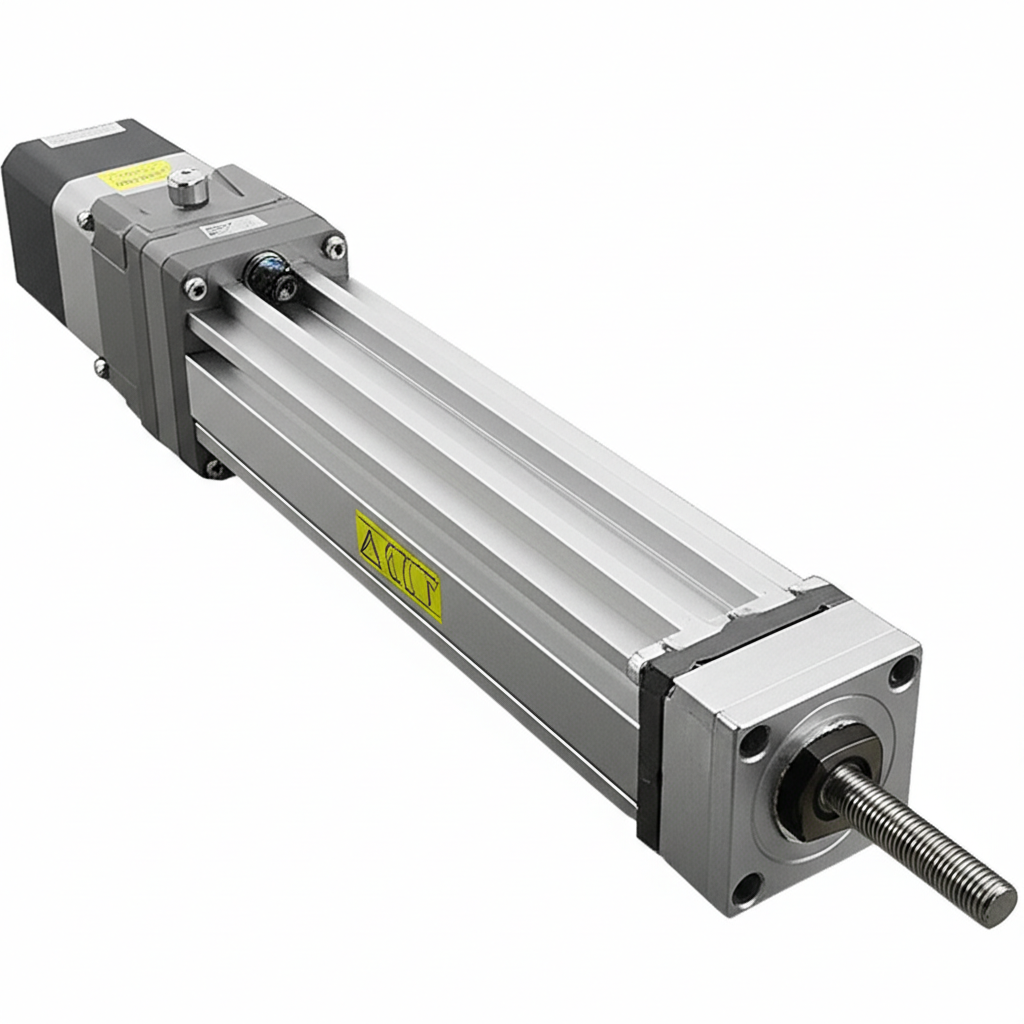
- Drive: high-efficiency ball/roller screw driven by a servo or geared motor

On paper, these parameters match the hydraulic cylinder’s working point exactly — 8T of pressing force is more than adequate for the mold-clamping and pressing stages, while 80 mm/s gives cycle times equal to or better than the original hydraulic circuit. The difference is everything that surrounds the cylinder.
Why Replace Hydraulics? The Practical Reasons
1. Eliminating oil leaks and contamination
Hydraulic oil leakage is the single most common complaint in tire plants. Oil mist and drips contaminate rubber compounds, stain finished tires, create slip hazards, and force frequent housekeeping shutdowns. An electric hydraulic actuator alternative — a self-contained elektrischer Antriebszylinder — contains no oil circuit at all. There are no hoses to age, no seals to weep, and no reservoir to service. For a product where surface cleanliness directly affects appearance quality and downstream bonding processes, this alone often justifies the conversion.
2. Energy efficiency: 70–80% savings are typical
A hydraulic power unit runs continuously to maintain system pressure, consuming energy even when the cylinder is idle between press cycles. An electric over hydraulic cylinder solution draws power only during motion. Because the screw drive is mechanically self-locking, the 8T pressing force can be held indefinitely with almost zero power consumption — no pump running against a relief valve. In this customer’s application, measured energy consumption per cycle dropped by more than 70%.
3. Precision, repeatability, and process data
Hydraulic position control depends on proportional valves, oil temperature, and pressure stability. An elektrischer Hubzylinder with a servo drive and encoder delivers:
- Positioning repeatability of ±0.1 mm or better across the full 300 mm stroke
- Fully programmable speed profiles — fast approach at 80 mm/s, slow controlled press, programmable dwell, and fast retract
- Real-time force–position curves for every pressing cycle
This last point is increasingly valuable: tire manufacturers pursuing Industry 4.0 and traceability want a digital record of every press cycle. An electric actuator cylinder produces that data natively; a hydraulic cylinder requires additional sensors and integration effort to do the same.
4. Lower total cost of ownership
The purchase price of an electric cylinder is typically higher than a bare hydraulic cylinder — but a bare hydraulic cylinder is not a fair comparison. The hydraulic solution’s true cost includes the power unit, valves, hoses, oil, filtration, leak remediation, seal replacement, and the energy bill for a pump that runs all day. When total cost of ownership over five years is calculated, the electric over hydraulic cylinder solution usually comes out ahead, often with a payback period under two years on energy and maintenance savings alone.
5. Simplified installation and maintenance
The retrofit itself was straightforward: the electric cylinder mounted on the same clevis and trunnion points as the hydraulic unit it replaced, with the 300 mm stroke matching the original working travel. Instead of hydraulic plumbing, the installation required only a power cable and a signal cable to the machine controller. Maintenance now consists of periodic greasing of the screw — a task measured in minutes per year rather than the continuous attention a hydraulic system demands.
Why 8 Tons, 80 mm/s, and 300 mm Is a Sweet Spot
Not every station on a tire press needs the brute force of a large hydraulic ram. Many functions — mold handling, segment actuation, bead ring pressing, ejector mechanisms, and post-cure inflation presses — operate comfortably within the 5–10 ton range. At 8 tons of push and pull force, this electric actuator cylinder covers that entire class of applications with margin to spare.
The 80 mm/s speed matters more than it might appear: it allows the cylinder to complete a full 300 mm stroke in under four seconds, keeping pace with demanding cycle times while still permitting slow, force-controlled pressing profiles in the final portion of travel. And because the force rating is symmetrical — 8T in both push and pull — a single cylinder model serves both pressing and return-stroke-loaded applications, simplifying spare parts stocking.
The Broader Trend: Electric Over Hydraulic Is Here to Stay
This customer is not an outlier. Across tire manufacturing, rubber processing, and industrial automation generally, the move from hydraulics to electromechanical actuation is being driven by four converging forces:
- Sustainability mandates. Corporate carbon targets make the energy waste of central hydraulic systems increasingly hard to justify. Electric actuators cut both direct energy use and the environmental risk of oil disposal.
- Labor economics. Skilled hydraulic technicians are scarce; an electric cylinder requires no hydraulic expertise to install or maintain.
- Digital manufacturing. Traceability, predictive maintenance, and closed-loop process control all favor actuators that speak the language of industrial networks natively.
- Maturing technology. A decade ago, electric cylinders above 5 tons were exotic and expensive. Today, 8T, 10T, and even 50T-class electric hydraulic actuators alternatives are standard catalog products, with roller-screw designs offering service lives measured in tens of millions of cycles.
The result is that “electric over hydraulic” has shifted from an experimental upgrade to the default engineering question on every new machine design and every hydraulic retrofit: is there any reason this axis still needs oil? For an ever-wider range of forces, the answer is no.
Schlussfolgerung
The replacement of a hydraulic cylinder with an 8-ton, 80 mm/s, 300 mm-stroke elektrischer Antriebszylinder on tire pressing equipment delivered exactly what the trend promises: cleaner operation, over 70% energy savings, digitally recorded process control, and dramatically simplified maintenance — all at a lower five-year cost of ownership.
Whether you call it an elektrischer Hubzylinder, an electric over hydraulic cylinder solution, or part of the new generation of electric hydraulic actuators, the engineering conclusion is the same: for tire press applications in this force class, electromechanical actuation is no longer the alternative — it is the upgrade path. If your plant is evaluating a hydraulic-to-electric conversion, our engineering team can help you match force, speed, and stroke to your existing mounting dimensions and cycle requirements.


Einen Kommentar hinterlassen