
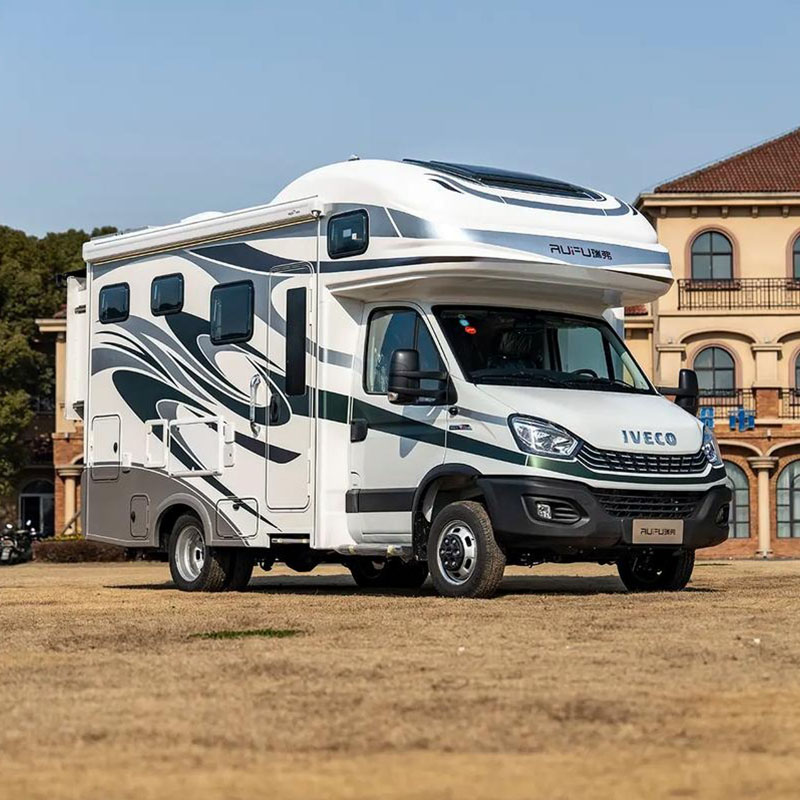
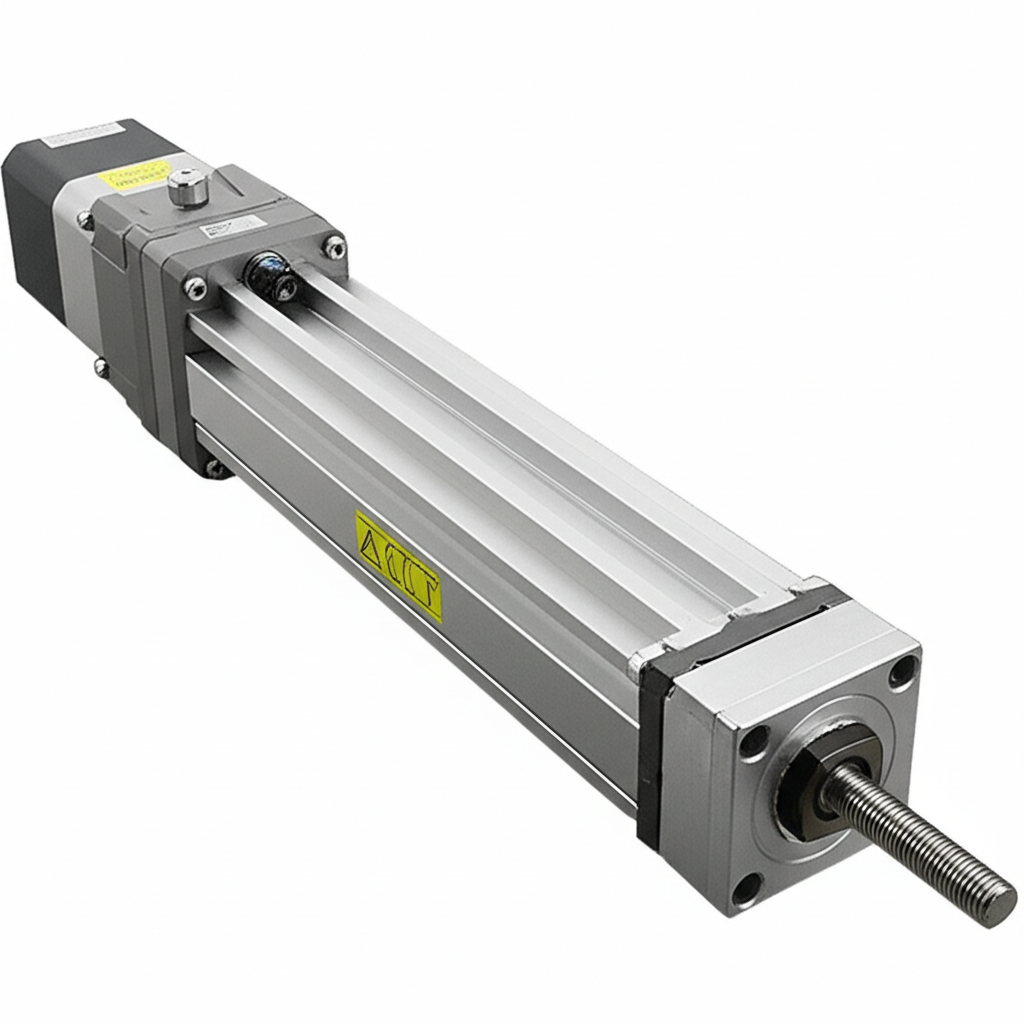
Le secteur des véhicules de loisirs (VR) modernes a connu une transformation remarquable au cours de la dernière décennie, portée par l'intégration de technologies d'automatisation intelligentes. Au cœur de cette évolution se trouve le actionneur électrique linéaire— un dispositif électromécanique compact qui transforme un mouvement de rotation en un déplacement linéaire précis. Ces actionneurs linéaires sont devenus des composants indispensables dans les camping-cars, les caravanes et les camping-cars de type « truck camper » modernes, remplaçant les manivelles manuelles, les systèmes hydrauliques et les vérins à gaz par un système de commande électrique silencieux, fiable et facile à utiliser. Qu'il s'agisse de relever un toit relevable, de déployer une extension coulissante ou d'ouvrir un auvent, les actionneurs électriques linéaires améliorent le confort, la sécurité et la praticité pour les amateurs de camping-cars du monde entier.
Principales applications de Actionneurs électriques linéaires dans les camping-cars
1. Systèmes de toit relevable et de toit coulissant
L'une des applications les plus révolutionnaires de actionneurs linéaires dans les camping-cars, c'est le système de levage automatisé du toit. Les camping-cars à toit relevable traditionnels nécessitaient deux personnes pour soulever manuellement les lourds panneaux de toit, une tâche fastidieuse et potentiellement dangereuse. Les systèmes modernes de levage électrique du toit utilisent des actionneurs linéaires compacts de type « stylo » à forte poussée, capables de soulever des toits de camping-car pesant jusqu'à 200 kg d'une simple pression sur un bouton.
Ces systèmes comportent généralement un mécanisme à vis autobloquante et assurent une protection optimale, garantissant que le toit reste solidement fixé, même en cas de vents violents ou de forces extérieures. Les modèles haut de gamme sont testés pour IP67M / IP69K normes d'étanchéité, ce qui leur confère une grande résistance aux fortes pluies, à la poussière et aux jets d'eau à haute pression. La hauteur de levage varie généralement entre 110 mm (fermé) à 540 mm (complètement ouvert), un cycle de levage complet s'effectuant en environ 20 secondes à pleine charge.
Un exemple notable est celui de la Système électrique de levage de toit CARTUATOR, qui intègre une protection contre les surintensités, un mécanisme de fermeture par pression prolongée anti-pincement et un mode de fonctionnement manuel d'urgence en cas de coupure de courant. Ce système a obtenu CE, UKCA, UL325 et CSA certifications, garantissant la conformité pour l'exportation vers l'Europe, le Royaume-Uni, les États-Unis et le Canada.

2. Extensions de pièce coulissantes
Les extensions coulissantes constituent une caractéristique distinctive des camping-cars modernes, car elles agrandissent considérablement l'espace de vie intérieur lorsque le véhicule est à l'arrêt. Le déploiement de ces sections coulissantes lourdes exige actionneurs électriques linéaires capable de supporter des charges importantes. Par exemple, le Actionneur TiMOTION MA1 est spécialement conçu pour les extensions coulissantes des camping-cars, offrant une capacité de charge maximale de 4 500 N et un IP69K indice de protection permettant de résister aux intempéries et au nettoyage à haute pression.
La synchronisation de plusieurs actionneurs est essentielle dans les systèmes d'extension. Étant donné qu'il n'existe pas deux moteurs à courant continu standard fonctionnant exactement à la même vitesse, des actionneurs non synchronisés peuvent entraîner une torsion et un blocage de l'extension. Les systèmes avancés pour camping-cars utilisent donc des actionneurs dotés d'un Capteurs à effet Hall associés à des contrôleurs synchrones spécialisés qui surveillent et ajustent la vitesse de chaque unité en temps réel, garantissant ainsi une extension et une rétraction parfaitement régulières.
3. Stores rétractables et accessoires d'extérieur
Les stores électriques constituent une autre application très répandue où actionneurs linéaires évitent d'avoir à actionner manuellement la manivelle ou à monter à l'échelle. Le Actionneur TiMOTION MA4, d'une capacité de charge pouvant atteindre 2 000 N et facultatif IP69K de protection, est particulièrement adaptée au déploiement d'un auvent. Ce système automatisé réduit considérablement le risque de blessure tout en offrant instantanément de l'ombre et une protection contre les intempéries sur le terrain de camping.
Pour les utilisations plus intensives, telles que les rampes de chargement arrière pour motos ou fauteuils roulants, le Actionneur MA2 offre jusqu'à 8 000 N de force, permettant de charger facilement des équipements encombrants sans effort physique.
4. Mobilier d'intérieur et systèmes réglables
À l'intérieur de l'habitacle du camping-car, actionneurs électriques linéaires fauteuils inclinables électriques, tables réglables en hauteur, supports élévateurs pour téléviseur et lits escamotables. Le Actionneur TiMOTION TA16, par exemple, permet de régler simultanément l'inclinaison du dossier et le déplacement du repose-jambes à l'aide d'un seul moteur, offrant ainsi un mouvement synchronisé pour une détente optimale. Les étagères de rangement escamotables dans le plafond ou le plancher sont facilement accessibles grâce à des commandes au pied ou manuelles, ce qui optimise l'utilisation de l'espace limité dans un camping-car.
5. Systèmes de mise à niveau automatique
Pour garantir stabilité et confort lors du stationnement sur un terrain accidenté, les systèmes de mise à niveau des camping-cars s'appuient sur actionneurs linéaires pour ajuster la position du véhicule. Les vérins de nivellement électrohydrauliques destinés aux camping-cars de classe A et de classe C utilisent des ensembles d’actionneurs synchronisés — généralement quatre unités commandées par un écran tactile central — afin d’obtenir un alignement horizontal précis. Ces systèmes sont indispensables pour éviter tout désalignement des mécanismes d’extension et garantir un bon écoulement des eaux usées des installations sanitaires du camping-car.
Exigences relatives aux paramètres critiques des actionneurs linéaires pour véhicules de loisirs
Choisir le bon actionneur électrique linéaire La mise en œuvre d'une application RV nécessite d'examiner attentivement plusieurs paramètres clés :
Tableau
| Paramètre | Gamme typique | Importance |
|---|---|---|
| Tension | 12 V CC / 24 V CC | Systèmes électriques standard des camping-cars |
| Force de poussée/traction | 300 N – 8 000 N | Cela varie selon l'application (toit, extension coulissante, auvent) |
| Longueur de la course | 100 mm – 1 000 mm | Détermine la distance d'extension |
| Vitesse | 5 mm/s – 50 mm/s | Allie vitesse et capacité de charge |
| Indice de protection IP | IP66 – IP69K | Indispensable pour une utilisation en extérieur ou dans des environnements humides |
| Cycle de travail | 10% – 25% | Définit la durée de fonctionnement avant la mise en veille |
| Niveau de bruit | < 50 dB – < 65 dB | Essentiel pour le confort intérieur |
| Certifications | CE, UL, CSA, UKCA | Obligatoire pour les marchés internationaux |
| Système de retour d'information | Capteurs à effet Hall / Potentiomètres | Permet le contrôle de position et la synchronisation |
Exemples concrets et études de cas
Étude de cas n° 1 : Systèmes de levage à actionneur électrique d'Alaskan Campers
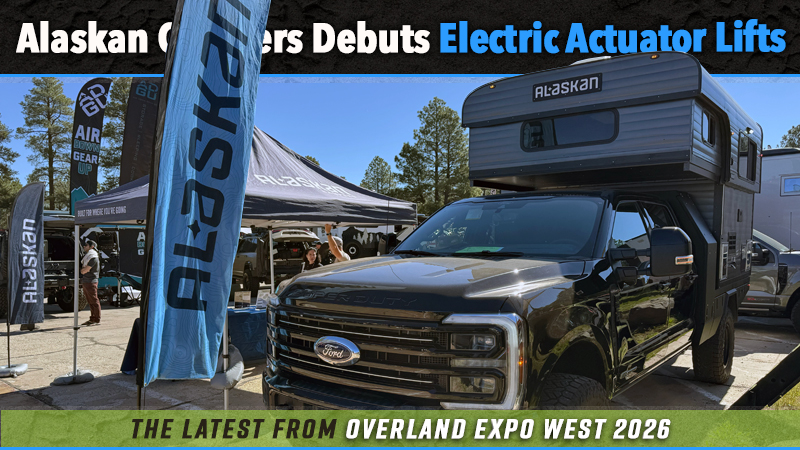
Lors de l'Overland Expo West 2026, Campeurs d'Alaska a dévoilé son camping-car de nouvelle génération, équipé d'un système de levage à actionneurs entièrement électriques. Cette innovation a remplacé les systèmes de levage hydrauliques traditionnels par actionneurs électriques linéaires, offrant un fonctionnement plus silencieux, un entretien réduit et un réglage précis de la hauteur. Ce système permet au toit rigide de la caravane de se lever et de s'abaisser en douceur, transformant ainsi le véhicule en quelques secondes, passant d'un véhicule de croisière discret sur autoroute à un abri de camping spacieux.
Étude de cas n° 2 : Aménagement de la caravane JIMMY
En Australie, les fabricants de caravanes pliantes ont intégré Actionneurs linéaires OD3 en remorques d'expédition tout-terrain. Ces remorques ultra-résistantes actionneurs linéaires sont montés à l'extérieur pour relever les auvents des tentes et déployer les modules de cuisine, démontrant ainsi leur robustesse dans les conditions difficiles de l'Outback. La construction en acier inoxydable des actionneurs et leur indice de protection IP élevé garantissent des performances fiables malgré l'exposition à la poussière, à l'humidité et aux températures extrêmes.
Étude de cas n° 3 : Camping-car à deux étages SLRV Commander 8×8
C'est peut-être l'application la plus ambitieuse de actionneurs linéaires dans le monde du camping-car, c'est le SLRV Commander 8×8, un camping-car de luxe à deux étages fabriqué en Australie. Ce mastodonte de 12 mètres est équipé d'un système de levage à actionneurs sur mesure capable de relever et d'abaisser l'ensemble de l'étage supérieur de la cabine. Ce système illustre comment actionneurs électriques linéaires peut s'adapter aussi bien à des applications compactes pour camping-cars qu'à des systèmes architecturaux imposants et robustes destinés aux véhicules de loisirs.
Conclusion
Actionneurs électriques linéaires ont profondément transformé l'expérience du camping-car, en remplaçant le travail manuel par une automatisation intelligente au niveau des toits relevables, des extensions coulissantes, des auvents, du mobilier intérieur et des systèmes de mise à niveau. Alors que le secteur continue d’exiger des capacités de charge plus élevées, une meilleure étanchéité et une synchronisation plus intelligente, les fabricants d’actionneurs répondent à ces attentes avec des produits de pointe dotés d’un système de rétroaction à effet Hall, d’un indice de protection IP69K et de systèmes de commande intégrés. Pour les constructeurs de camping-cars, les équipementiers et les fournisseurs du marché de la rechange, il est essentiel de comprendre les exigences spécifiques en matière de force, de course, de vitesse et d’environnement de chaque application afin de sélectionner la solution optimale actionneur linéaire solution. Alors que le marché mondial des camping-cars devrait connaître une croissance régulière jusqu'en 2026 et au-delà, le rôle de actionneurs électriques linéaires car ce secteur, qui constitue la colonne vertébrale de l'automatisation des camping-cars, ne cessera de se développer.
Laisser un commentaire