
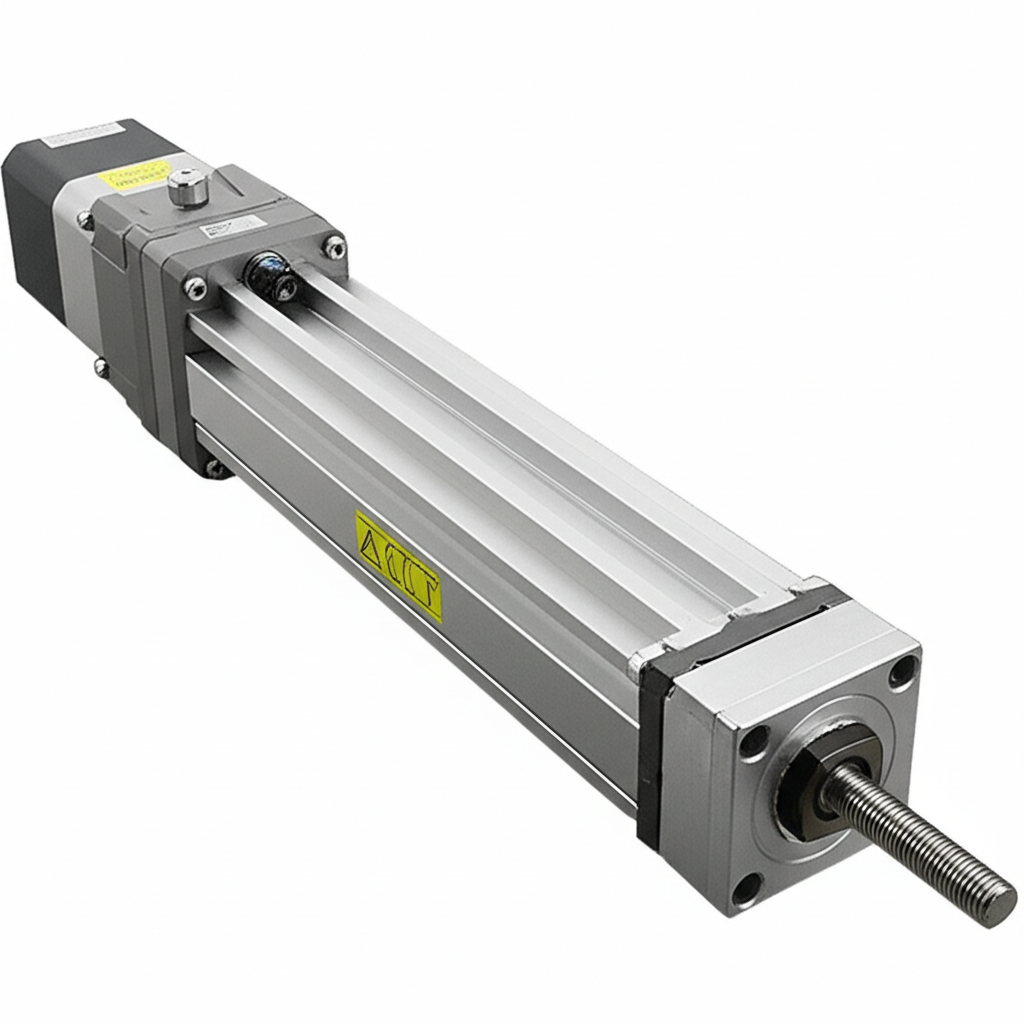
Global Market Analysis: Linear Actuators, Electric Cylinders, and Linear Guides (2024-2025) & Outlook for 2026
1. Introduction
This report provides a comparative analysis of the estimated global market performance for three key linear motion product segments—リニアアクチュエータ, 電動シリンダー, そして Linear Guides—for the years 2024 and 2025, along with a preliminary outlook for 2026. The analysis considers overall market size, growth trends, key drivers, and regional dynamics. (Note: Figures are based on a synthesis of available industry reports, analyst projections, and market trends as of early 2026. Specific data points are modeled estimates for illustrative analysis.)

リニアアクチュエータ
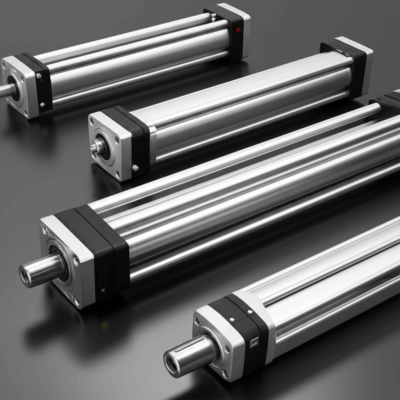
Electric cylinders
直線運動
2. Market Size & Growth Comparison: 2024 vs. 2025
The global market for linear motion systems demonstrated resilient growth in 2025, continuing the recovery and expansion trajectory from 2024. The push for industrial automation, smart manufacturing, and energy-efficient solutions remained the primary catalyst.
Key Observations from 2024-2025:
-
Overall Growth Acceleration: All segments saw slightly accelerated growth in 2025 compared to 2024, reflecting increased capital expenditure in automation post-pandemic stabilization and supply chain easing.
-
Segment Divergence:
-
電動シリンダー exhibited the highest growth rate, underscoring the strong industry shift towards electrification and Industry 4.0-ready components.
-
Linear Guides followed closely, highlighting their critical role in enabling the precision required in next-generation manufacturing and high-tech industries.
-
リニアアクチュエータ, while representing the largest volume market due to diverse applications, grew at a steady but slightly more moderate pace, reflecting its maturity in many sectors.
-
-
Regional Performance: The Asia-Pacific (APAC) region, led by China, Japan, and South Korea, remained the largest and fastest-growing market, consuming over 50% of global output, driven by its massive electronics and general manufacturing base. North America and Europe showed robust growth, particularly in high-value segments like aerospace, medical devices, and advanced robotics.
3. Market Outlook for 2026
The global market for linear motion products is projected to maintain strong, healthy growth in 2026, albeit with potential headwinds.
Positive Drivers:
-
Sustained Automation Investment: The megatrends of labor shortage mitigation, reshoring/nearshoring of production, and smart factory development will continue to fuel demand.
-
Expansion in New Industries: Electric Vehicle (EV) battery manufacturing, renewable energy systems (e.g., panel handling), and life sciences automation will create new, high-value application pools.
-
Technology Integration: Increasing demand for “smart” components with integrated sensors (IO-Link, condition monitoring) and ready-to-connect designs for predictive maintenance and data analytics.
-
Performance & Efficiency Demands: Continuous need for higher speed, precision, load capacity, and energy efficiency across all manufacturing sectors.
Potential Challenges & Trends:
-
Geopolitical & Economic Uncertainty: Potential economic slowdowns in key regions could temporarily dampen capital investment. Supply chain diversification will remain a priority.
-
Material Cost Volatility: Fluctuations in the cost of steel, rare earth elements (for motors), and electronics may impact margins and pricing.
-
Competitive Intensity: The market will remain highly competitive, with pressure on manufacturers to innovate (lighter materials, higher efficiency) while controlling costs.
-
Consolidation & Specialization: Expect continued mergers and acquisitions, alongside growth for niche players offering highly specialized or ultra-high-precision products.
2026 Projections:
-
Linear Actuators: Growth is expected to remain steady at ~6-8%, reaching an estimated market size of ~$9.5 – $9.9 Billion. Growth will be driven by evolving applications in service robots, adaptive furniture, and agricultural tech.
-
電動シリンダー: This segment is forecast to be the growth leader again, with an estimated ~11-13% increase, pushing the market to ~$4.8 – $5.1 Billion. The replacement cycle for legacy fluid power systems will be a major contributor.
-
Linear Guides: Projected to grow at ~9-10%, matching its 2025 pace, leading to a market size of ~$7.9 – $8.3 Billion. The ongoing boom in semiconductor fab construction and the automation of logistics warehouses will be significant drivers.
4. Strategic Conclusions
The linear motion market from 2024 to 2026 depicts a trajectory of robust, technology-driven expansion. The transition from traditional pneumatics to electric solutions (benefiting Electric Cylinders significantly) and the insatiable demand for precision (driving Linear Guides) are the defining narratives. While リニアアクチュエータ serve as the volume backbone, 電動シリンダー represent the high-growth electrification pivot, and Linear Guides are the enabling technology for advanced manufacturing. Success in 2026 will depend on suppliers’ abilities to offer integrated, smart, and application-optimized solutions while navigating a complex global economic and supply chain landscape.
| Product Segment | Estimated Global Market Size 2024 | Estimated Global Market Size 2025 | Year-on-Year Growth | Primary Growth Drivers (2025) |
|---|---|---|---|---|
| リニアアクチュエータ | ~$8.2 – $8.5 Billion | ~$8.9 – $9.2 Billion | ~7-8% | Proliferation in lower-duty applications (HVAC, home automation, healthcare equipment, solar tracking). Demand for compact, cost-effective solutions. |
| 電動シリンダー | ~$3.8 – $4.0 Billion | ~$4.3 – $4.5 Billion | ~10-12% | Direct replacement of hydraulic/pneumatic systems in factory automation, packaging, and automotive assembly for precision, cleanliness, and control. |
| Linear Guides | ~$6.5 – $6.8 Billion | ~$7.2 – $7.5 Billion | ~9-11% | Foundational component in all high-precision machinery. Growth driven by semiconductor equipment, laser processing, machine tools, and advanced robotics. |
Key Observations from 2024-2025:
-
Overall Growth Acceleration: All segments saw slightly accelerated growth in 2025 compared to 2024, reflecting increased capital expenditure in automation post-pandemic stabilization and supply chain easing.
-
Segment Divergence:
-
電動シリンダー exhibited the highest growth rate, underscoring the strong industry shift towards electrification and Industry 4.0-ready components.
-
Linear Guides followed closely, highlighting their critical role in enabling the precision required in next-generation manufacturing and high-tech industries.
-
リニアアクチュエータ, while representing the largest volume market due to diverse applications, grew at a steady but slightly more moderate pace, reflecting its maturity in many sectors.
-
-
Regional Performance: The Asia-Pacific (APAC) region, led by China, Japan, and South Korea, remained the largest and fastest-growing market, consuming over 50% of global output, driven by its massive electronics and general manufacturing base. North America and Europe showed robust growth, particularly in high-value segments like aerospace, medical devices, and advanced robotics.
3. Market Outlook for 2026
The global market for linear motion products is projected to maintain strong, healthy growth in 2026, albeit with potential headwinds.
Positive Drivers:
-
Sustained Automation Investment: The megatrends of labor shortage mitigation, reshoring/nearshoring of production, and smart factory development will continue to fuel demand.
-
Expansion in New Industries: Electric Vehicle (EV) battery manufacturing, renewable energy systems (e.g., panel handling), and life sciences automation will create new, high-value application pools.
-
Technology Integration: Increasing demand for “smart” components with integrated sensors (IO-Link, condition monitoring) and ready-to-connect designs for predictive maintenance and data analytics.
-
Performance & Efficiency Demands: Continuous need for higher speed, precision, load capacity, and energy efficiency across all manufacturing sectors.
Potential Challenges & Trends:
-
Geopolitical & Economic Uncertainty: Potential economic slowdowns in key regions could temporarily dampen capital investment. Supply chain diversification will remain a priority.
-
Material Cost Volatility: Fluctuations in the cost of steel, rare earth elements (for motors), and electronics may impact margins and pricing.
-
Competitive Intensity: The market will remain highly competitive, with pressure on manufacturers to innovate (lighter materials, higher efficiency) while controlling costs.
-
Consolidation & Specialization: Expect continued mergers and acquisitions, alongside growth for niche players offering highly specialized or ultra-high-precision products.
2026 Projections:
-
Linear Actuators: Growth is expected to remain steady at ~6-8%, reaching an estimated market size of ~$9.5 – $9.9 Billion. Growth will be driven by evolving applications in service robots, adaptive furniture, and agricultural tech.
-
電動シリンダー: This segment is forecast to be the growth leader again, with an estimated ~11-13% increase, pushing the market to ~$4.8 – $5.1 Billion. The replacement cycle for legacy fluid power systems will be a major contributor.
-
Linear Guides: Projected to grow at ~9-10%, matching its 2025 pace, leading to a market size of ~$7.9 – $8.3 Billion. The ongoing boom in semiconductor fab construction and the automation of logistics warehouses will be significant drivers.
4. Strategic Conclusions
The linear motion market from 2024 to 2026 depicts a trajectory of robust, technology-driven expansion. The transition from traditional pneumatics to electric solutions (benefiting Electric Cylinders significantly) and the insatiable demand for precision (driving Linear Guides) are the defining narratives. While リニアアクチュエータ serve as the volume backbone, 電動シリンダー represent the high-growth electrification pivot, and Linear Guides are the enabling technology for advanced manufacturing. Success in 2026 will depend on suppliers’ abilities to offer integrated, smart, and application-optimized solutions while navigating a complex global economic and supply chain landscape.



 English
  Arabic
  Russian
  Spanish
  French
  Japanese
  Korean
  German
コメントを残す