

Linear Electric Motor & Furniture Linear Actuator: A Complete Guide to Smart Home Applications, Safety, and Sizing Calculations
Introduction: The Quiet Muscle Behind the Smart Home
Walk into a modern smart home and you will find dozens of hidden actuators working silently. The adjustable bed that tilts you into reading position, the standing desk that rises at the tap of an app, the recliner chair that gently lifts an elderly parent to their feet, the TV lift that emerges from a cabinet, the skylight that opens automatically when the room gets warm — all of these are powered by a linear electric motor, a device that converts rotary motion into precise, controlled straight-line push and pull.
In the furniture industry, this component is commonly called a furniture linear actuator. Unlike industrial actuators, furniture-grade units are designed for low noise (typically under 45 dB), compact profiles, aesthetic integration, and above all — safety in homes where children, pets, and elderly people live. Choosing the right actuator is not simply a matter of picking the cheapest motor. It requires careful calculation of load force, speed, stroke, and duty cycle, combined with a clear understanding of the safety standards that govern residential use.
This guide explains the typical smart home applications of linear electric motors, the safety features you must demand, and the exact formulas engineers use to calculate speed and push-pull force when selecting a furniture linear actuator.
Typical Smart Home Applications of Furniture Linear Actuators
1. Adjustable Beds and Smart Mattresses
The most common application is the adjustable bed frame. One or two furniture linear actuators raise the head section, the foot section, or both, allowing users to elevate their legs, sit up to read, or relieve snoring and acid reflux. Hospital-grade versions add height adjustment. Each actuator typically handles 2,000–6,000 N (450–1,350 lbf) because it must lift the mattress plus a substantial portion of the user’s body weight.

Figure 1: A smart adjustable bed driven by furniture linear actuators hidden inside the frame.
2. Lift Chairs and Recliners
Lift chairs help seniors stand up safely. Here the actuator lifts not only the chair mechanism but effectively part of the sitter’s weight — often the highest load in home furniture, around 3,000–5,000 N. Because a person is in the motion path, anti-pinch and low-speed smooth-start features are essential.
Figure 2: Actuator placement in a recliner (footrest) and an adjustable bed lifting frame.
3. Height-Adjustable Desks
Sit-stand desks use one or two synchronized actuators to raise a desktop plus monitors (typically 80–120 kg). Speed matters here — users expect full travel in 10–20 seconds — but collision detection matters more, because a rising desk can crush cables, a chair, or a child’s fingers.
4. TV Lifts, Cabinets, and Kitchen Appliances
TV lifts raise a 30–60 kg screen vertically out of furniture. Pop-up kitchen outlets, lift-up cabinet doors, drop-down projector screens, and hidden appliance garages all rely on compact furniture linear actuators with strokes of 300–700 mm.
5. Windows, Skylights, and Ventilation
Automated window openers use small linear electric motors (300–1,000 N) to push outward-opening windows. Paired with temperature, rain, and CO₂ sensors, they form the backbone of natural-ventilation smart home systems. Wind load on a large window sash can significantly increase the required force.
What a Linear Electric Motor Actually Is
A furniture linear actuator consists of a small DC motor (usually 12 V or 24 V), a reduction gearbox, and a lead screw or ball screw that converts rotation into linear stroke. Because the motor’s torque is amplified by the gearbox and the screw’s mechanical advantage, even a palm-sized unit can push hundreds of kilograms.
There is, however, a fundamental engineering trade-off — visible in every manufacturer’s performance curve: force and speed are inversely related. The same actuator family can be wound to move fast with low force, or slow with high force, but never both. Understanding this curve is the key to correct sizing.
Figure 3: Typical force-versus-speed curves. Operating above the recommended load limit shortens life due to nut wear.
How to Calculate Required Push-Pull Force
Step 1: Draw the Free-Body Diagram
Most furniture loads are not lifted vertically — they are lifted through a linkage, a hinged panel, or an inclined surface. Sketch the geometry and resolve the weight into components.
For a load on an incline at angle θ:
- Gravity component along the slope: F = m · g · sin(θ)
- Friction: f = μ · m · g · cos(θ)
- Total force: F_required = m · g · (sin θ + μ cos θ)
Figure 4: Free-body force analysis for a linear actuator pushing a load up an incline.
Step 2: Account for the Mechanical Advantage of the Linkage
In an adjustable bed, the actuator rarely pushes the mattress directly — it drives a scissor or lever linkage. Measure the ratio of actuator stroke to panel lift. If a 300 mm actuator stroke lifts the head panel by 250 mm vertically but the geometry multiplies force by 2×, the actuator sees roughly half the load force… or twice it, depending on orientation. Always check both extremes of the motion, because the required force is usually maximum at the start of travel, when the linkage angle is worst.
Step 3: Add the Safety Factor
Dynamic loads, uneven weight distribution (a person sitting on one side of the bed), friction in hinges, and manufacturing tolerances all add uncertainty. The industry standard is:
F_actuator = F_required × 1.5 ~ 2.0 (safety factor)
Worked example — adjustable bed head section:
- Mattress + user load on head section: 60 kg
- Effective linkage multiplier: 1.4
- Required force: 60 × 9.81 × 1.4 ≈ 824 N
- With 1.5 safety factor: ≈ 1,240 N → select a 2,000 N furniture linear actuator (leaving headroom for longevity).
Never size to the actuator’s absolute maximum rating. The performance curve shows that running continuously at the recommended load limit already reduces screw-nut life; running above it causes rapid backlash and failure.
How to Calculate and Choose Speed
Speed is chosen by user experience and safety, not by maximum capability:
表格
| Application | Typical Speed | Reasoning |
|---|---|---|
| Lift chair / recliner | 15–30 mm/s | Slow, smooth motion protects users |
| Adjustable bed | 20–40 mm/s | Comfort; full travel in ~20–40 s |
| Standing desk | 30–60 mm/s | Productivity; full travel in ~15 s |
| TV lift | 20–35 mm/s | Stability of a tall, heavy screen |
| Window opener | 10–25 mm/s | Safety near hands, low noise |
The speed calculation itself is simple:
Travel time = Stroke ÷ Speed
Example: a 500 mm desk stroke at 40 mm/s takes 12.5 seconds — acceptable. The same desk at 15 mm/s would take 33 seconds, which users find frustrating. Also verify the loaded speed, not the no-load speed on the datasheet: a good manufacturer specifies speed at rated load, and it can be 20–40% lower than no-load speed.
Finally, remember the inverse relationship shown in Figure 3. If your force requirement rises, you must accept a slower actuator or move to a larger frame size.
Other Critical Parameters
- Stroke: Measure the required linear travel at the mounting points — not the panel angle — plus 10–20 mm margin at both ends.
- Duty cycle: Most furniture actuators are rated 10–25% (e.g., 2 minutes on, 8 minutes off). A desk used hourly is fine; a massage bed mechanism cycling continuously may need 50% duty units.
- Voltage: 12 V suits battery-backup lift chairs; 24 V is standard for beds and desks, drawing half the current for the same power (P = V × I), reducing wiring losses and heat.
- IP rating: IP54 for indoor furniture; IP65+ for kitchens, bathrooms, and window openers exposed to rain.
- Noise: Demand ≤ 45 dB at 1 m for bedrooms and living rooms.
- Static load and self-locking: A lead-screw furniture linear actuator is inherently self-locking — a bed must not sink under a sleeping user’s weight when power is off. Verify the static load rating is at least equal to the dynamic requirement.
Safety: Non-Negotiable Features for Smart Home Use
Safety separates a professional furniture linear actuator from a generic industrial one:
- Anti-pinch / obstacle detection — the control box monitors motor current; a sudden rise (an obstruction) triggers instant reversal. This is mandatory in lift chairs and children’s furniture.
- Thermal overload protection — a PTC sensor in the motor cuts power before the windings exceed safe temperature, critical because homeowners will block a mechanism or press buttons repeatedly.
- Low-voltage SELV operation — 12/24 V DC eliminates mains-voltage shock risk inside furniture, satisfying EN 60335 and UL 962 requirements.
- Mechanical end-stop switches — the motor is cut at both ends of stroke so the mechanism cannot jam or crush its own mounts.
- Compliance certifications — look for CE, UL, and EN 527 / EN 16139 (furniture strength and safety) test reports, and EMC compliance so the actuator doesn’t interfere with your Wi-Fi and Zigbee smart home network.
- Emergency lowering — for medical and elderly applications, battery backup allows the bed or chair to return to a safe flat position during a power outage.
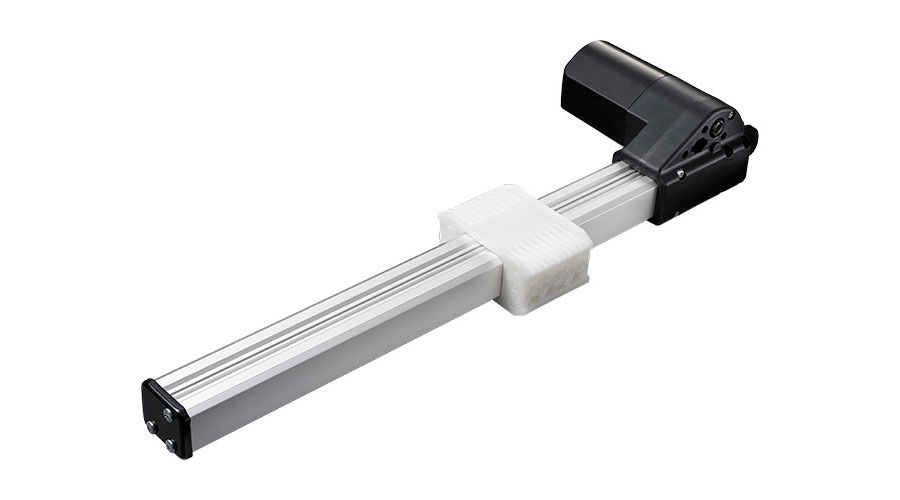
Figure 5: A typical 12 V furniture linear actuator kit with IP54 protection, suited to lift desks, recliners, and window openers.
Conclusion: Size It Right, Make It Safe
The linear electric motor is the invisible muscle of the smart home, and the furniture linear actuator is its most safety-critical form, moving people and heavy objects in living spaces. Correct selection follows a disciplined sequence: calculate the true load force with free-body analysis and linkage ratios, apply a 1.5–2× safety factor, choose speed from the application table (checking loaded speed, not no-load speed), then verify stroke, duty cycle, noise, IP rating, and self-locking behavior. Finally, insist on anti-pinch detection, thermal protection, and recognized certifications.
An actuator that is 20% undersized will fail within months; one that is correctly sized will deliver ten years of silent, safe, effortless motion — which is exactly what a smart home promises.
Leave A Comment