
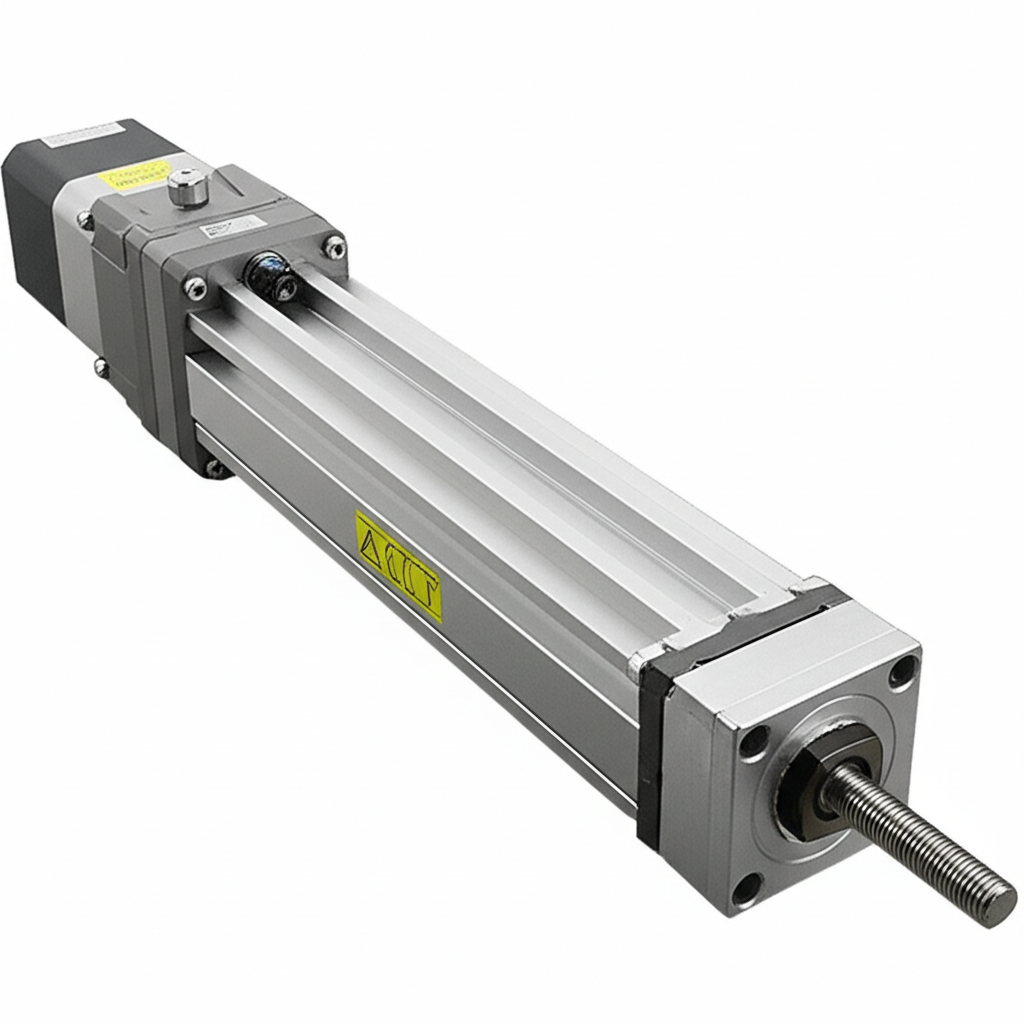
Aircraft Linear Actuator and Aircraft Electric Cylinder Applications in Aerospace & Space
From flight control surfaces to rocket thrust vectoring — a detailed look at electromechanical actuation in modern aviation.
The global shift toward more-electric aircraft has placed electromechanical actuation at the center of modern aerospace design. An aircraft linear actuator converts electrical energy into precise linear motion to control surfaces, deploy landing gear, and manage environmental systems. Meanwhile, the aircraft electric cylinder — a high-force, servo-controlled variant — is increasingly replacing traditional hydraulic cylinders in primary and secondary flight controls. Together, these devices reduce weight, eliminate hydraulic plumbing, and improve maintainability across commercial, military, and space platforms.
1. Primary & Secondary Flight Control Surfaces
Electromechanical actuators now drive ailerons, elevators, rudder trim tabs, and spoilers on both manned and unmanned aircraft. Companies such as Crouzet Aerospace and ITT Aerospace Controls supply compact linear actuators that operate trim tabs and cowl flaps with machine-screw drive systems and long-life permanent-magnet DC motors. These aircraft linear actuator units are RTCA-DO-160 qualified, meaning they survive extreme temperature, shock, and vibration.
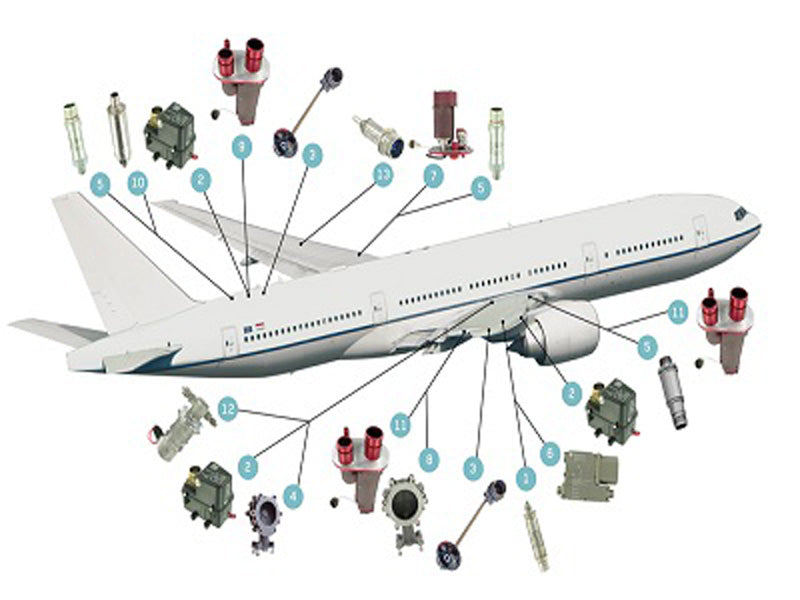
On larger platforms, Parker Hannifin produces electromechanical flight-control actuators that manage spoiler and flap deployment. The Airbus A380 and Lockheed Martin F-35 employ Electro-Hydrostatic Actuators (EHA) — a hybrid architecture where an electric motor drives a local hydraulic pump connected to a cylinder. This eliminates miles of hydraulic tubing while retaining the high-force benefits of an aircraft electric cylinder.
2. Landing Gear Extension & Retraction
Landing gear actuation is one of the most demanding applications for an aircraft electric cylinder because it must generate thousands of newtons of force while fitting inside thin wing cavities. Safran unveiled a fully electric nose landing gear actuator in 2022, replacing the conventional hydraulic jack with a brushless DC motor and ball-screw mechanism. The system includes a free-fall emergency release and integrated position feedback.

CIRCOR Aerospace also develops main and nose landing gear door actuators for commercial aircraft, using redundant electromechanical architectures requested by the U.S. Air Force. These aircraft linear actuator systems replace heavy hydraulic lines with 28 VDC or 270 VDC power feeds, cutting overall system weight by up to 20 %.
3. Thrust Vector Control & Space Propulsion
In the space sector, Ultra Motion supplies high-performance linear actuators for thrust vector control (TVC). Two Ultra Motion actuators gimbal the second-stage engine of Orbex’s Prime rocket, providing high power in a compact envelope. The company also supported Masten Space in test flights for Mars landing technology, where rapid, precise nozzle positioning was critical.
Hypersonic startup Hermeus uses Ultra Motion A2 Servo Cylinders — a type of aircraft electric cylinder — to control nozzle flaps during hot-fire testing. The integrated BLDC electronics and Phase Index absolute position sensor deliver rock-solid feedback under severe vibration and thermal loads exceeding 100 °C.
Key specification: Aerospace-grade actuators typically operate from –40 °C to +100 °C, withstand extreme shock and vibration, and offer environmental sealing to IP67 or higher.
4. UAVs, Tilt-Rotor & Satellite Deployment
Unmanned platforms are early adopters of all-electric actuation. Moog model 974 linear servo actuators position the nacelles on a tilt-rotor UAV during flight-mode conversion, operating under extreme environmental and endurance conditions. On orbital vehicles, miniature linear actuators deploy solar arrays, antenna booms, and instrument doors — functions where every gram matters.
5. Environmental Control & Utility Systems
Beyond flight-critical surfaces, aircraft linear actuator devices manage cabin pressurization, fuel valves, and air-duct butterfly valves. Sitec Aerospace actuators — powered by maxon brushless motors — are found in water, oxygen, hydraulic, fuel, and air systems. ITT Aerospace Controls offers dual-motor low-profile actuators for Environmental Control Systems (ECS) where redundancy is safety-critical.
In passenger comfort systems, electric actuators adjust humidification valves and regulate coolant flow through heater cores — silent, hygienic, and precisely controllable compared to pneumatic alternatives.
6. Aircraft Electric Cylinder vs. Aircraft Linear Actuator
While the terms are sometimes used interchangeably, an aircraft electric cylinder generally refers to a high-force, servo-motor-driven ball-screw or roller-screw unit capable of primary flight loads (often >5 kN). An aircraft linear actuator tends to describe lower-force, compact units for trim, utility, and secondary controls. Both share the same electromechanical DNA: brushless DC motor, gearbox, position sensor, and power-drive electronics — but the cylinder adds rigid housing, anti-rotation, and integrated load cells for closed-loop force control.
Market outlook: The global high-force linear actuator market is projected to grow from USD 1.92 billion in 2026 to USD 3.45 billion by 2034 (CAGR 7.6 %), driven largely by aerospace electrification.
From the ailerons of a commercial jet to the thrust vector nozzles of an orbital rocket, the aircraft linear actuator and aircraft electric cylinder have become indispensable enablers of the more-electric aircraft paradigm. With proven deployments by Safran, Parker, Moog, Ultra Motion, and ITT, electromechanical actuation delivers the precision, reliability, and weight savings that next-generation aerospace platforms demand. As the industry moves toward all-electric architectures, these actuators will only expand their role — making skies cleaner, spacecraft lighter, and maintenance simpler.
Leave A Comment