Powering Precision and Sustainability: The Engine Behind Modern Motion and Solar Tracking
In an era defined by automation and the urgent transition to renewable energy, the demand for reliable, precise, and efficient motion control has never been greater. At the heart of countless industrial, commercial, and technological advancements lie critical components that work silently yet powerfully to convert rotational force into controlled, linear movement and precise rotation. This article delves into the core technologies enabling this progress: linear actuators, electric cylinders, and slewing drives. We will explore their fundamental role in creating sophisticated linear motion systems and their vital application in solar trackers, which are pivotal for maximizing renewable energy capture.
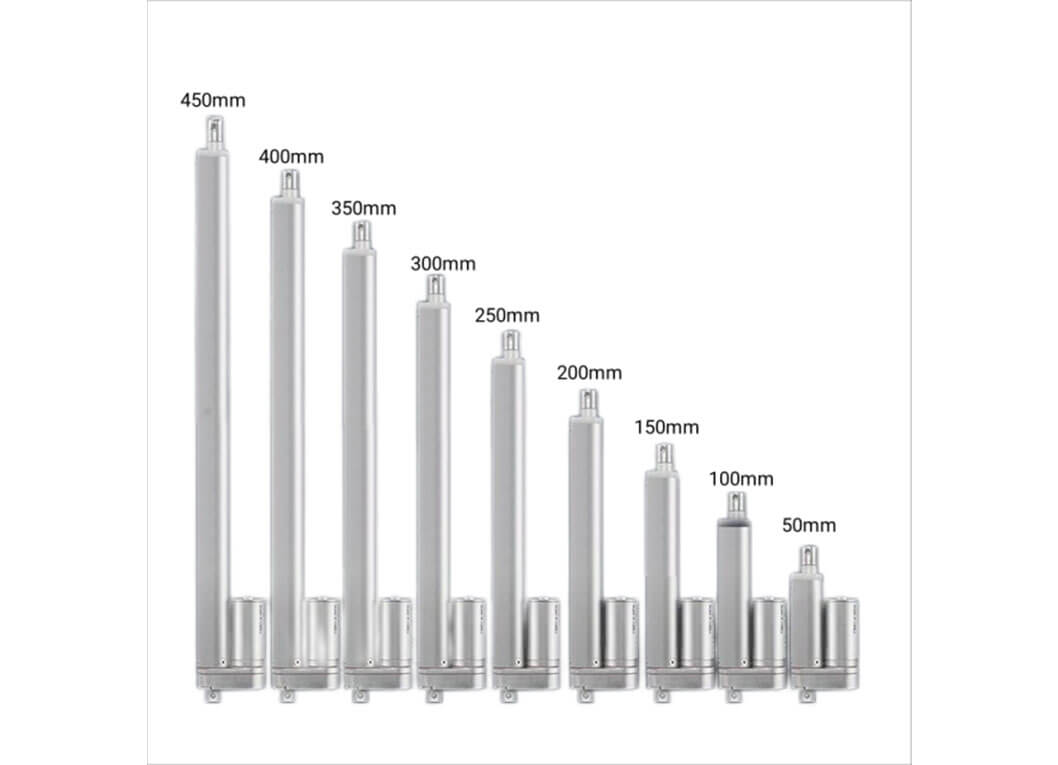
Linear motion—the movement of an object in a straight line along a single axis—is a foundational requirement in automation. From manufacturing robots assembling electronics to hospital beds adjusting for patient comfort, the need for controlled, push-pull motion is ubiquitous. Enter the linear actuator, the workhorse of direct linear movement. These devices transform the rotary motion of a motor into precise linear displacement. When this concept is integrated into a self-contained, robust package, often with advanced feedback and control, it forms an electric cylinder. Electric cylinders offer superior precision, programmability, and maintenance-free operation compared to their traditional pneumatic or hydraulic counterparts, making them indispensable in modern factory automation, packaging machinery, and aerospace applications.
But what about applications that require not just linear movement, but also controlled, rotational positioning under heavy loads? This is where slewing drives come into play. A slewing drive is a compact, high-torque gearbox that facilitates slow, controlled rotation around a vertical or horizontal axis. Combining a worm gear set with a mounting surface, it can handle immense radial and axial loads while providing precise azimuth control. This unique capability makes it a cornerstone for applications requiring robust, reliable rotation.
The convergence of these technologies finds one of its most impactful applications in the renewable energy sector, specifically in solar trackers. Unlike fixed-tilt solar arrays, solar trackers follow the sun’s path across the sky, significantly increasing energy yield—by up to 25-35% annually. This critical movement relies on precise motion control systems. Linear actuators or electric cylinders are often employed in the linear actuation of single-axis trackers, pushing and pulling panel rows to follow the sun’s elevation. For more complex dual-axis trackers or for rotating large central axes of massive solar panel arrays, slewing drives provide the durable, weather-resistant rotational movement needed to withstand decades of outdoor operation.
Understanding the synergy between linear actuators, electric cylinders, and slewing drives is key to appreciating the engineering behind advanced linear motion and automated tracking systems. As industries strive for greater efficiency and the world leans more heavily into solar power, these components will continue to be the unsung heroes of precision and sustainability. In the following sections, we will break down each technology, examine their design principles, and highlight how they collectively drive innovation in automation and clean energy solutions.




 English
  Arabic
  Russian
  Spanish
  French
  Japanese
  Korean
  German